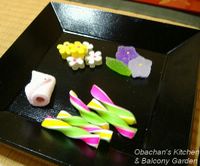
It was not really a formal tea ceremony anyway. It was actually some kind of event for “the commencement of the sightseeing season in Muroto city,” and people sold food and local specialties at 5 to 6 booths built along the path going down to the beach of cape Muroto. They made a set menu of a substantial bento, a bowl of fish’n vegetable soup and matcha with wagashi as a dessert for 1000 yen or something altogether. They sold about 150 meal tickets for this set menu, so my mom and her students needed to make tea 150 times and more. So you can see how far it was from formal tea ceremony. ;)
You might wonder how tea ceremony was related to the sightseeing in Muroto. It’s not that the traditional performance is especially popular in this area. But tea ceremony was something nice to add cultural and traditional touch to the event, I guess, and more than anything, it can use the leading product of the area – “deep sea water.” Yes, my mom and her students used deep sea water (desalted) for making matcha. I’ll talk about how it affected the taste of the tea later.
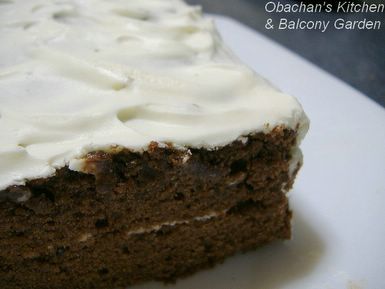
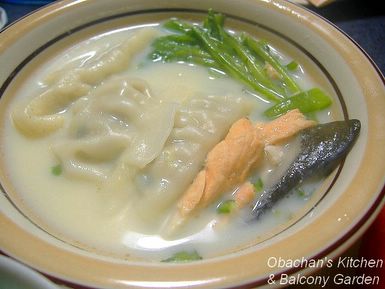
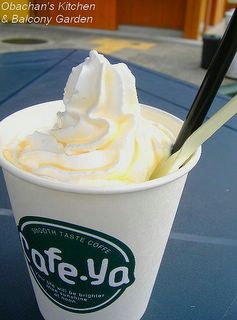
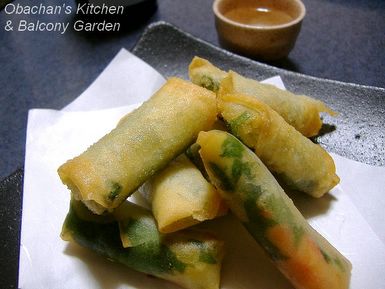
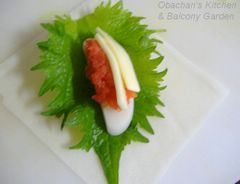
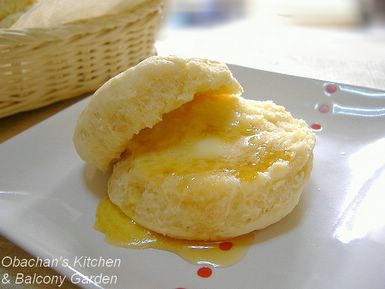
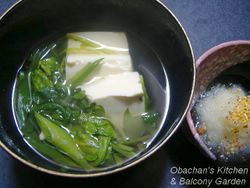
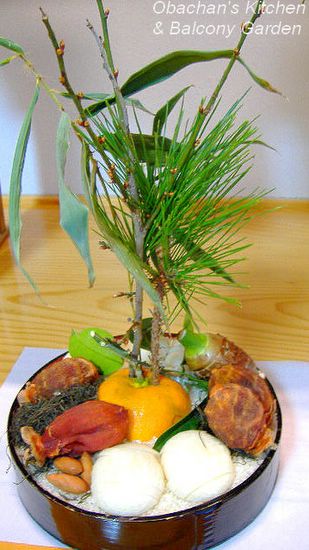
Anyway, these are the food photos I managed to take before we started setting up our booth. After that, I didn’t have a chance to take out my camera.

This was the booth by local chefs and they made and sold nigiri-zushi bento there. They started working earlier than any other booths.

At our booth, we spread white cloth over the foldable tables and set 10 foldable chairs. My mom and her students made tea in one corner which was hidden from visitors by red-and-white backdrops. Three RELATIVELY young women (incl. myself) in kimono received tickets from visitors and told tea-makers the number, then brought matcha and wagashi to the tables.
The funny thing was that most of the wagashi was rice cakes with anko inside, and the rice cake part was so moist and sticky that the guests couldn’t cut it easily with a wooden pick. Most of the local people don’t really care about the manner of tea ceremony, but since women in kimono brought tea and took a bow as serving it, they seemed to have thought that they had to behave elegantly, too. So all of them tried to cut the wagashi nicely instead of stabbing it with the wooden pick and biting it off. It was hilarious to see them – even big old guys – trying so hard to cut the small rice cakes.
The most amazing thing was that there were three or four kids who really loved the matcha and asked for seconds, or thirds. One of them even came to the “backstage area” to say thank you to my mom and her students. I guess those of you readers who have tried matcha know how bitter it is. Even though we made weaker matcha for kids, it was totally amazing that kids loved it so much. The secret was the deep sea water. I don’t know why, but when you use deep sea water for cooking or making drinks, it always makes the taste a lot milder. Maybe because of its rich mineral content?? So, some think it ruins the real taste and flavor of tea or coffee, but some do like it.
Well, helping the event was kind of fun, after all, but I don’t know if I want to do this again in the future.
And the izakaya work that night just completely killed me. Honestly. :O
-----
Dear readers,
Please help me with English. What's the difference between "desalted seawater" and "desalinated seawater?" The former had 217 hits and the latter had 9,540 hits with google, so the latter seems to be more popular, but is this a grammer thing or is there a difference in their production process or something?