Mushi No Ne (Chirping of Insects)
As I wrote before, wagashi is often made to reflect seasonal themes, and named to tell us what it is depicting. This one is no exception.
Can you guess what they named this wagashi?
---
The answer is mushi no ne 虫の音 (chirping of insects). The two brown lines represent autumn grass, perhaps leaves of sedge or susuki (Japanese silver grass), and the black sesame seed is a cricket. The chirping of cricket is a typical autumn theme here, perhaps as in other countries, too, and many Japanese associate the sound with the serenity and a slight sadness of a long autumn night. We especially love the chirping of suzumushi (Homoeogryllus japonicus, Japanese bell cricket or bell insect), which sounds like this. (Click on the 56K next to the audio icon under the photo of the insect.)
This type of wagashi is called manjuu, which is basically steamed cake usually with sweet bean paste filling. If grated yam is added when making the skin, it is called joyo manjuu, and the skin turns out whiter, softer and moister. I assume that is what this is.
Sorry, I forgot to take a shot to show you inside of this manjuu. Instead, I added some trivia about the chirping of insects, so please read on if you are interested.
Read More
 If you stayed overnight in a small village here in Japan in autumn and got fascinated by the beautiful chorus of the bell insects surrounding you, you might be tempted to let your friend in a bigger city hear it. So you hold the receiver of the house phone or your cell phone out of the window to let it catch the chirping sound. But your friend will not hear it. It is a widely-knonwn(?) fact here that the frequency of bell crickets’ chirping is too high for a phone to capture. According to some Japanese websites, a telephone can transmit the sound with the frequency below 3500Hz. But the frequency of the chirping of bell crickets is apx. 4500Hz, so it cannot be transmitted by phone.
Another well-known theory here is that Japanese people and Western people hear the chirping of insects differently. The theory says that when a Japanese person hears it, (s)he uses the left hemisphere of the brain, while a Westerner hears the same sound using the right hemisphere, where the sound, noise and the music are processed. I think this is based on a book called Nihonjin no No ("The Japanese Brain" 1978) by Tadanobu Tsunoda. He gave dichotic listening test to both Japanese and Westerners and made a comparison.
I haven’t read this book myself so I’m not 100% sure, but from what I've read in a couple of websites quoting this book, his findings seem to have indicated that Japanese do hear linguistic sounds using the left hemisphere of the brain and other sounds (music, noise, etc.) using the right hemisphere, just like Westerners do, with some exceptions: Chirping of insects and the sound of certain Japanese musical instruments are processed in the left hemisphere of the Japanese brain (or maybe more precisely, the brain of those who speak Japanese as the first language.) Does this mean that we Japanese are hearing those sounds as "linguistic sounds?" Are we perceiving that the insects or the musical instruments are "talking" to us???
Aren’t we strange people? ;)
* Wagashi by Shingetsu
Categories: Wagashi

 I started with a Japanese recipe I found on the net, and the ingredients were grated carrots, grated onion, grated garlic, salad oil, vinegar, salt, pepper and sugar. But I found it too sour, so as usual, I added some twists of my own. I added soy sauce, olive oil, sherry, more sugar and even finely chopped pine nuts (leftover from my previous basil pesto attempt). Perhaps I added too many ingredients… I think they pretty much hid the natural sweetness of the carrots. But the dressing tasted good with these cucumbers and lettuce, and even better when used as a sauce for fish meuniere. :)
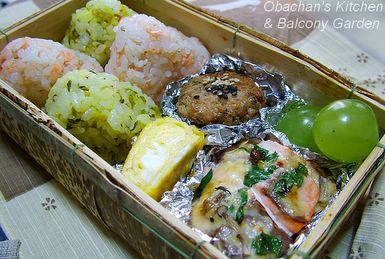

 So here I posted a photo that I took on my way back from the park. This was the only photo of a sign of autumn.
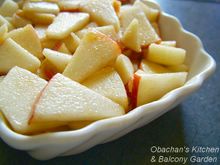 Sorry, ancestors. But the aroma of cooking apples and spices from the oven is just too irresistible on an autumn afternoon like this. And this apple dessert is awfully tasty and easy to make, so nothing could stop me.
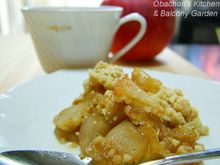 It worked brilliantly. Oh this was such a perfect dessert for this September afternoon. And the good thing is -- I had a lot of crumble left (I really think I made a mistake when scaled down the recipe) and froze it. Next time I can make this apple dessert much more easily ;)
 For me these two ingredients make a lot of difference. As I probably wrote somewhere before (did I? I don’t remember exactly…) alcohol and amino acids they contain contribute in adding extra flavors as well as helping the food absorb flavors of the seasonings.
 For this
  To tell you the truth, we’ve gone through some changes in the past couple of months at the small kaiseki place where I work. In August, one of the chefs quit in the middle of the month. For the rest of the month, we had a chef who came as a temporary help in the kitchen. It was kind of hilarious. He was undoubtedly a good-hearted, fun person, but obviously not a very meticulous type. Me and this helper chef did make “brave” decisions once in a while when the kitchen was terribly busy. (Don’t tell that to our head chef, please.) :P
 To my surprise, it really didn’t take long to boil down the beer. The beer turned into this thick, caramelized liquid (left photo, in the glass) a lot quicker than I had expected. Since the recipe recommended to use flavorful beer, I avoided
 And I’m proud to show you this photo (above). See how I removed the cake from the pan this time?! The secret is the tool they call “chiffon knife” here. Yes, I finally bought one, and now even an obachan like me can do a good job like this. Yay!

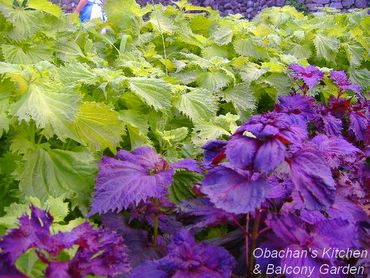


 It is not difficult to make this drink, but it is just a lot of work. First, you have to pick crazy amount of shiso leaves and wash them all very carefully. Then you add some water and a little citric acid and soak the leaves in the solution overnight until they turn yucky brownish color. Next morning, drain and squeeze out all the juice from the leaves into the brown-colored solution, add sugar and bring to boil. You’ll end up with bright pink shiso juice. (It looks rather red in this photo, though.) My mom drains the juice again, and keeps it in bunch of PET bottles after cooled. Imagine a fridge full of plastic bottles like these...

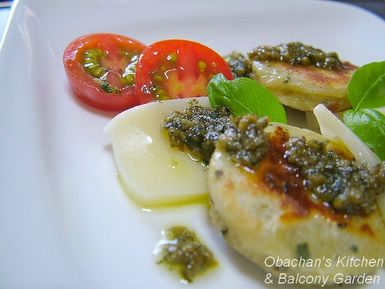


 The combination of tomatoes, mozzarella, basil, olive oil and garlic is simply divine! And the basil-pesto-mixed gnocchi were really delicious!