


 Takenoko Gohan Bento One good thing about working in a small office in a rural town is that you often get rewarded with fresh seafood, fruits or vegetables for your hard work. Well, actually the quality of your work does not really matter. It’s just a temporary food surplus. Almost everyone around you has at least a farmer or a fisherman in his/her relatives, and you often find yourself involved in an endless barter trading among kind-hearted grannies and aunties (and sometimes uncles, too). This time what I got was these two fresh bamboo shoots.  I like bamboo shoots, but I have to admit that it’s a pain in the neck to cook fresh ones properly to get rid of the harshness. How to do it? You need to pre-boil them in hot water with a lot of rice bran added. And you need to hurry; the longer you leave them in the sheaths like this, the stronger the harshness will be. I like bamboo shoots, but I have to admit that it’s a pain in the neck to cook fresh ones properly to get rid of the harshness. How to do it? You need to pre-boil them in hot water with a lot of rice bran added. And you need to hurry; the longer you leave them in the sheaths like this, the stronger the harshness will be.If rice bran is not available, you can use rice rinsing water instead. That’s what I did this time. And my mom told me to leave the bamboo shoots in the rice rinsing water overnight after boiling them in it. If it was only my mom who said that, I wouldn’t have believed it, but I found the same advice on the internet, too, so I followed it. But perhaps rice rinsing water is not as effective as rice bran… I didn’t recognize much harshness in takenoko gohan (Japanese pilaf with bamboo shoots), but after eating my takenoko no tosa-ni (bamboo shoots simmered in dashi and extra bonito flakes), I felt strange sensation on my tongue for a while. * Some say that if you boil bamboo shoots long enough and soak them in running water long enough, it is not really necessary to use rice bran or rice-rinsing water. I don't know how true it is, though...  Takenoko no Tosa-ni But I really enjoyed the crunchiness of the fresh bamboo shoots. :) Thanks, boss. I guess I'm going to chop up the leftover tosa-ni and use them for another batch of takenoko gohan. Categories: Japanese |
Showing posts with label Simmered dish. Show all posts
Showing posts with label Simmered dish. Show all posts
Saturday, April 28, 2007
Takenoko (Bamboo Shoots) from My Boss

Thursday, March 08, 2007
Saba No Miso-ni
 Saba no miso-ni (Mackerel simmered in miso-based soup?) Sorry. This is the kind of dish I can never post a recipe for. I repeated tasting and adding seasonings many times, and finally had to thin down the soup quite a bit :P Categories: Japanese |
Tuesday, February 06, 2007
Still Experimenting...
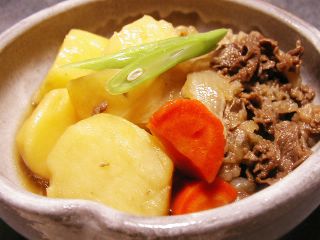
 Nikujaga (Simmered Meat & Potatoes) I know. You see carrot and onion, too. But even in its Japanese name, only meat and potatoes are mentioned. I was hoping to be able to post "my" nikujaga recipe here this time, but I was not satisfied with the result. Mmmm... more trials and errors... :( Categories: Japanese |
Wednesday, January 17, 2007
I Was Too Lazy Today...
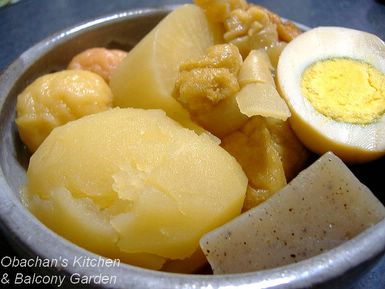
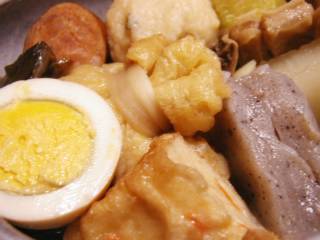
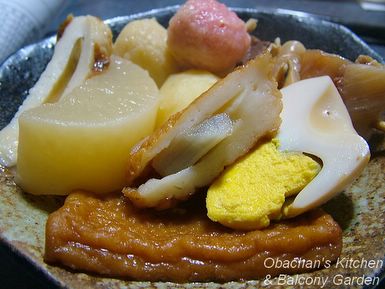 Oden (Cooked in instant oden soup) Uh... Don't you ever expect me to tell you how to make a strange-looking boiled egg like this. It's patented. ;)  OK. I lied. It’s not patented. (Of course.) :P It was nothing but my laziness. When I boiled the egg, this was what I did: I took it out from the fridge and threw it in the hot water from the tap and boiled it over very high heat. Just wanted it done ASAP. I know. A big no-no. The egg cracked right away and about 1/8 of the egg came out from the crack in the shell. Yeah, the pointy top was the part that came out. The top of the egg yolk was covered with a very thin layer of the egg white, but it came off when I sliced the egg in half. Well, I made a lot at one time, so this oden fed me for two nights. I think I had enough for this winter... Categories: Japanese |
Monday, May 29, 2006
Konnyaku Day!
 Jason of Pursuing my passions kindly invited me to join a blog event, “Konnyaku Day” which falls onto May 29th. To celebrate this day and bring the lovely gray food into the spotlight, participants post about konnyaku dish on his/her own blog and send URL to Jason so that he can do a roundup. OK. Here’s my konnyaku post ;) If you are not familiar with konnyaku, wikipedia tells you what it is. It certainly is considered as a diet food today, but when I was a child, it was known for a different health benefit; it was said to prevent urethral calculus. I heard this from our elementary school teacher, and I’ve met several people who said, “Oh, yeah! I’ve heard of that, too!” And none of them knew why and how konnyaku could prevent that disease. I don’t, either. :P BTW, I wonder how many of the participants decided to join this Konnyaku Day event because they really love this gelatinous food. To be honest, I have never been too crazy about konnyaku. Yes, there were a couple of times that I truly enjoyed delicate and tasty sashimi konnyaku from Kyoto or somewhere. But usually I don’t feel so happy when I find that gray stuff in simmered dishes. Nevertheless, I always include konnyaku in the ingredients when I make oden (Japanese hotchpotch) for a particular reason that I mentioned in my previous post. Now, for this post, I chose something I have heard of but never tried making before.  Konnyaku no miso ni (konnyaku simmered with miso) Here's the recipe. Konnyaku no miso ni Ingredients: 1 block konnyaku 1 Tbsp vegetable oil 2 Tbsp miso 1 Tbsp sake 1 Tbsp sugar 1 Tbsp mirin (rice wine) 2 tsp soy sauce 40 mL dashi stock 1 Tbsp roasted white sesame seeds A little ginger juice – optional Some salt 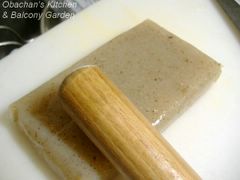 Sprinkle salt over konnyaku block and pound with a pestle or a rolling pin.* Wash and tear konnyaku into small chunks.** Put them in a saucepan, add water just to cover them, heat and bring to boil. Drain. In a pot (or a frying pan), heat vegetable oil. Add konnyaku chunks and fry for a few minutes. Add miso and heat until the miso is browned and gives out good aroma. Add sake, sugar, mirin, soy sauce and dashi stock. Simmer until the soup is thickened, stirring occasionally. Turn the heat to high and coat konnyaku with miso glaze, shaking the pot. (Add ginger juice, if desired.) Transfer to plate and sprinkle with roasted white sesame seeds. Sprinkle salt over konnyaku block and pound with a pestle or a rolling pin.* Wash and tear konnyaku into small chunks.** Put them in a saucepan, add water just to cover them, heat and bring to boil. Drain. In a pot (or a frying pan), heat vegetable oil. Add konnyaku chunks and fry for a few minutes. Add miso and heat until the miso is browned and gives out good aroma. Add sake, sugar, mirin, soy sauce and dashi stock. Simmer until the soup is thickened, stirring occasionally. Turn the heat to high and coat konnyaku with miso glaze, shaking the pot. (Add ginger juice, if desired.) Transfer to plate and sprinkle with roasted white sesame seeds. * I didn’t know this until recently, but this preparation is supposed to let excess water ooze out and make konnyaku suitable for simmering. * I didn’t know this until recently, but this preparation is supposed to let excess water ooze out and make konnyaku suitable for simmering.** Torn konnyaku chunks have ragged surface which allows better absorption of liquid seasonings. I came up with this recipe after combining a couple of recipes and adding my own twists, but still I was not totally happy with the taste. It will taste a lot differently if I use a different type of miso. -------  These are sashimi konnyaku blocks that are meant to be sliced and eaten raw like sashimi (sliced raw fish). They say this type of konnyaku contains more water and less calcium hydroxide. Sashimi konnyaku is often flavored with things like green laver or yuzu citrus. (Like so many other food products here in Kochi, deep sea water is added to these sashimi konnyaku in the photo.) These are sashimi konnyaku blocks that are meant to be sliced and eaten raw like sashimi (sliced raw fish). They say this type of konnyaku contains more water and less calcium hydroxide. Sashimi konnyaku is often flavored with things like green laver or yuzu citrus. (Like so many other food products here in Kochi, deep sea water is added to these sashimi konnyaku in the photo.)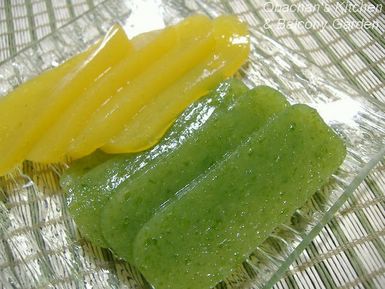 Sashimi Konnyaku --- Green Laver(Aonori) and Yuzu flavor Some people eat sashimi konnyaku with wasabi and soy sauce just like they eat sashimi, but for me sumiso (miso-vinegar dressing) is “the must.”  The way sumiso brings out the flavor of green laver or yuzu is so delightful and refreshing, and it is something particularly enjoyable on a hot summer day. I guess you could make the same kind of food out of gelatin, but I would definitely prefer the firmer and somewhat chewy texture of sashimi konnyaku in order to fully appreciate this very wafoo (Japanese-style) combination of flavors. The way sumiso brings out the flavor of green laver or yuzu is so delightful and refreshing, and it is something particularly enjoyable on a hot summer day. I guess you could make the same kind of food out of gelatin, but I would definitely prefer the firmer and somewhat chewy texture of sashimi konnyaku in order to fully appreciate this very wafoo (Japanese-style) combination of flavors.Categories: Japanese, WaFooD |
Saturday, February 25, 2006
煮物 Nimono (Simmered Dish)
 大根、海老と鶏挽肉の団子、若布、しいたけ Daikon, Shrimp-Chicken Meatball, Seaweed and Black Mushroom  Now this is a big blooper of mine, to tell you the truth. First of all, I was going to use turnip but couldn’t find one anywhere, so I ended up with substituting it with daikon radish. Second, I was going to use shirodashi instead of dark soy, because I knew that dark-soy would ruin the color of daikon and shrimp-chicken meat balls. But before I realized it, my hands disconnected from my brain added dark soy to this soup. ※■#△!The taste wasn’t too bad, but look how brown the daikon and meat balls turned out! :( Now this is a big blooper of mine, to tell you the truth. First of all, I was going to use turnip but couldn’t find one anywhere, so I ended up with substituting it with daikon radish. Second, I was going to use shirodashi instead of dark soy, because I knew that dark-soy would ruin the color of daikon and shrimp-chicken meat balls. But before I realized it, my hands disconnected from my brain added dark soy to this soup. ※■#△!The taste wasn’t too bad, but look how brown the daikon and meat balls turned out! :( |
Friday, February 17, 2006
Tai no Aradaki
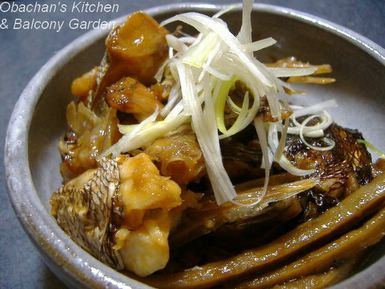 Tai no aradaki I gave up. There’s no way I can present tai no aradaki in a more sophisticated way, hiding all the grotesque parts. This is the best I can do.  What could be the proper English translation of tai no aradaki? It’s basically a simmered sea bream, but what you use is the head, bones, tail and a little flesh left on the bones, which were left after the fish was filleted. So it’s a very inexpensive dish (130 yen this time for all the fish parts), but believe me, the flesh left on the bones tastes sooooo good! Especially, there are some very tasty parts in the head of the fish that my grandma really loved to eat. ;) |
Friday, December 16, 2005
My Slow Cooker Repertoire #2 - Oden (Japanese Hotchpotch) -
|


Saturday, June 25, 2005
The Rest of the Kabocha was...
|


Sunday, May 15, 2005
Nimono (Simmered Dish)
|


Tuesday, April 26, 2005
Nikujaga!
|
Sunday, January 09, 2005
Daikon a la Carte
|
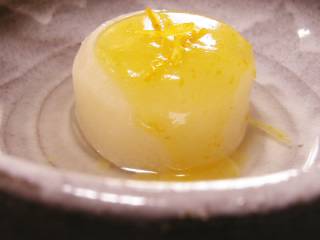
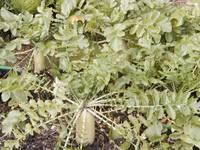

 Then make a deep crisscross in one side which should be the bottom when served. Boil them in rise rinsing water for apx. 20 min. Drain and wash with cold water quickly. Put

Tuesday, December 14, 2004
Oden - Japanese Hotchpotch -
It’s getting colder day by day. Time for a nice hotpot dish.
|

Thursday, November 18, 2004
Great Success!! -- Buri Daikon --
|

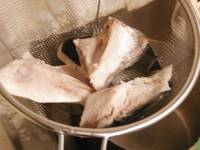
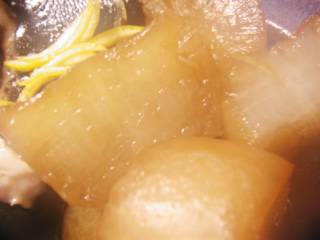
 (* Preparation: Boil daikon pieces with a pinch of raw rice until they start looking a little transparent. Wash rice off with water and drain.



Subscribe to:
Posts (Atom)