Thursday, July 28, 2005

National "Unagi" Day?!


Obachan's Unagi Donburi (eel on a bowl of rice)

Of course there is no such thing as ”National Unagi (eel) Day” on our calendar here in Japan, but I would think that the day almost deserves such a name. The day is actually called doyo no ushi no hi -– “day of the ox in midsummer” according to an online dictionary -- and said to be the hottest day of the year. It is our custom to eat unagi on that day, and the “day of the ox” fell on July 28th this year.

So what does the hottest day of the year have to do with unagi ? Well, here's a story widely known in Japan about how people started eating eel on that particular day.

More than 200 years ago, owner of a very UNpopular
unagi restaurant asked a guy for an idea for boosting their sales. The guy, Hiraga Gennai was a pharmacist and also a multi-talented genius who later invented something like an electrostatic generator. Gennai put up a poster at the restaurant, which said something like “Eat nutritious eel to beat summer weariness,” and people were convinced that it must be a good thing to eat such a nutritious food on the hottest day of the year.

It worked like a magic. The ad not only saved the slumping restaurant but created a custom that has been passed down for more than 200 years. What a great sales promotion strategy, don't you think? I wonder if anyone today can come up with a promo phrase that has such a long-lasting effect.


Anyway, today, we of course do not believe that eating eel on one particular day only can beat summer weariness. But we just have to try anything if it was said to be “good for health,” and here in Japan everyone does the same thing at the same time. Yes, I’m exaggerating, but maybe it’s not too far from the truth. There was a long line right outside this well-known unagi restaurant in Kochi city. These people were there for unagi bento to go, and only a few bentos were left when I took this photo.

Right outside a big supermarket, two guys were selling broiled eels. It’s not included in this photo, but there was a small BBQ grill next to this table and they were broiling the eels over charcoal. The young guy there was rather unhappy because I took a shot of the products they were selling only, not him. I didn’t have a nerve to just take a photo and say good bye, so I bought one there. The sauce came in a small plastic bag with the eel.

So, everyone, my unagi-donburi was again a ready-made stuff, except the rice I cooked at home :P I did use a little trick when preparing the donburi, though. After cutting the unagi in several pieces, I placed them on aluminum foil, sprinkled sake all over, brought up and pinched the edges of the foil together tightly, then heated the foil-wrapped unagi in a frying pan. This is supposed to make the unagi a little softer and tastier, according to a TV cooking show I saw a long time ago. The trick did not work like a magic, unfortunately, but I do think the photo of unagi-donburi on top looks pretty nice, at least. ;)

* I had been curious about the meaning of doyo so I did a little bit of online research. If you’re interested,
Read More
----------
In an ancient Chinese cosmology, Gogyo Theory (the Five Elements Theory), this world was considered to be made up of the five elements: fire, water, earth, metal and wood. When the theory was applied to the seasons, they associated wood with spring, fire with summer, gold with autumn and water with winter.

They saw the earth (土, pronounced "do")as something to aid the other elements, and placed it between the seasons. The philosophy there is that all seasons and elements return to earth before transforming into the next one. So, the last 18 days of each season is called “Doyo (土用),” i.e., the period of earth.

In ancient Chinese calendar, each day was associated with one of the 12 animals in the Zodiac. The "day of the ox” in the Doyo period between summer and autumn is supposed to be the hottest day of the year, perhaps because the sun comes to a certain point on the ecliptic on that day ….


That’s what I think I understood from several websites I went through regarding the "day of the ox.” Corrections by experts would be appreciated. PLEASE!

Monday, July 25, 2005

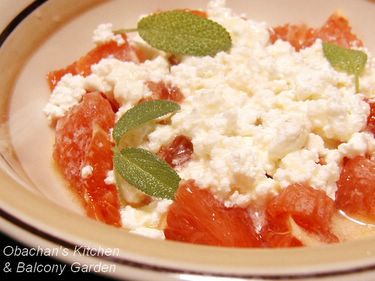
Ruby Red Grapefruit & Cottage Cheese Salad


Ruby Red Grapefruit and Cottage Cheese Salad

Boy, it’s hot…..!!
I hate coming back to my room which I won’t hesitate to call “the most unpleasant sauna on the face of the earth.” The stress I feel the moment I open the door must be affecting my mental health in a very negative way. To cope with it, I guess I need to feed myself with something refreshing and nutritious.

So here it is. Ruby Red Grapefruit and Cottage Cheese Salad. For the dressing, I mixed juice of the ruby red grapefruit, olive oil and yogurt, then seasoned with a little sugar and herb salt. This idea was, again, from a Japanese website, but I didn’t follow the recipe, as usual. (I almost doubled the amount of the grapefruit juice.)

Yes, the salad was very light-tasting and refreshing. I liked the way the dressing complemented the taste of cottage cheese. I finished one bowl real quick and wanted more.

Oh well, why not? This is one of those GUILT-FREE dishes, isn't it?
: )

Saturday, July 23, 2005

Rhubarb Cupcakes


Rhubarb Cupcakes

So this is what rhubarb tastes like!! :D

Today I finally used my rhubarb for baking. A couple of days ago, its leaves started turning yellowish, showing a sign of some kind of disease, so I decided to use it before it died. Now, everyone, this was my very first time using rhubarb in any kind of baking/cooking… I have tasted only a little bit of rhubarb jam before and that was it. I was so excited to find out how rhubarb chunks would taste when baked in a cake.

These rhubarb stalks were very thin and short, but I guess that was the best I could expect from growing rhubarb in a small pot on a balcony. I didn’t think they were enough for making any decent-sized cake, so after considering a few alternatives, I finally decided to downsize this recipe and make small cupcakes.

The result:
I just don’t understand why, but the top of the cupcakes cracked in a strange way… Underneath the thin layer of granulated sugar and chopped cashew nuts, there are big cavities… But the taste is GOOOOOOOOD!!
The sourness of the rhubarb chunks is just so refreshing in the sweet cupcake.
Hmmmm.... I love it !!

Wednesday, July 20, 2005

A La Provancale??


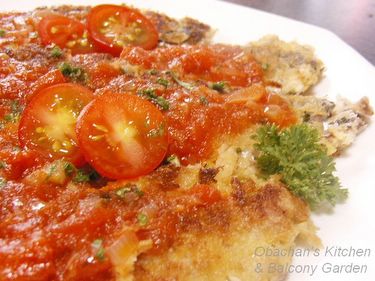
Horse Mackerel A La Provancale???


Honestly speaking, I don’t know exactly what the word “a la Provancale” means. Now I often see, in Japanese cookbooks/websites, dishes named with Japanese translation of “a la Provancale” at the end. From their recipes, I assumed that "a la Provancale" meant a dish with garlic, olive oil and tomatoes. Is this wrong?

Anyway, what I tried out this time was named “horse mackerel a la Provancale” in Japanese. The horse mackerel fillets were salt-and-peppered and breaded (I mixed in chopped basil leaves in the bread crumbs), then fried in a frying pan. I made the tomato sauce with canned tomatoes.

What I really wanted to do was baking the breaded mackerel fillets in the oven with the tomato sauce and grated cheese on top, but unfortunately I had no cheese left.
Maybe next time ;P

I don't know if this is an appropriate combination, but I thought that it would have been really nice with garlic bread and vichyssoise.

Thursday, July 14, 2005

Kawa-Udon


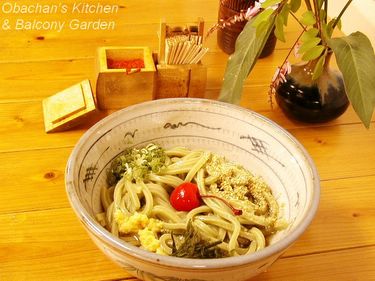
Kawa Udon ("River" Udon")

This is the cold udon I had at the Washi Paper Craft Village.
Green laver was kneaded in the dough, which gave the noodles refreshing green color. I guess they named it Kawa (river) udon because the laver came from the river.

Very tasty with the toppings: grated ginger, minced scallion, sesame seeds and green laver. Oh, and a cherry, too. (I'm not too crazy about a cherry on top of Japanese traditional noodles... It looks pretty, but taste-wise, I don't think it's such a great match.)

This udon was available at a small eatery in the building on the right, where they sold local vegetables and souvenirs.

Nice tea time I had today


"Cake set"

I dropped by a coffee shop after visiting the Paper Museum in a town called Ino-cho. What's on top of the cake was not a chestnut but pear compote. The brown-colored gelatin layer was caramel-flavored.

The people there were super-nice. The lady who works there drew me a nice map when I asked the way to the closest tram stop. I was too tired and forgot about time, so it was already 20 minutes past their closing time when I checked out, but they never said anything about that... They just nicely gave me a coupon book, and kept regretting not having enough time to give me a lot more information about sightseeing in Kochi.

P.S. Click here to share the good time I had today ;)

Wednesday, July 13, 2005

Reimen, Not Ramen


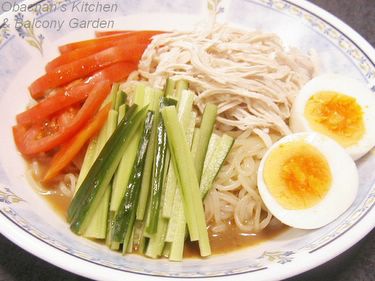
Reimen or Hiyashi Chuka

When it’s so hot and humid, I love to have this for lunch. We call it 冷やし中華Hiyashi Chuka (Cold Chinese noodles) or 冷麺Reimen (Cold noodles). I’m not sure if this is a Japanese invention or something that came from China. Anyone?

Unlike regular hot noodles, reimen is usually served in a very flat bowl or on a plate, and the soup is poured over the noodles just like dressing. Or you dip the noodles into the soup served in a separate small bowl and slurp.

This was another ready-made stuff again. All I did was boiling/cooling the noodles and preparing the toppings. The sesame sauce came in a plastic bag and was pretty tasty.

Yummy! :D

Food at Hirome 1 -- Shio-Tataki Donburi --


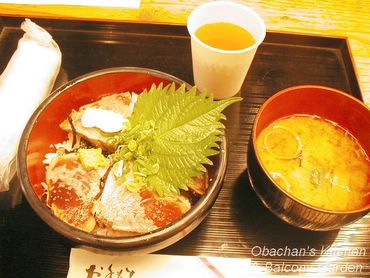
Shio-tataki (Seared Bonito Seasoned with Salt Only) Donburi

This is what I had today at Hirome: shio-tataki donburi (seared bonito seasoned with salt only and served on a bowl of rice). It was 600 yen with the small tea and miso soup.

To be honest, I have heard that in some fishing towns in Kochi, people eat seared bonito with salt only without any soy sauce or ponzu, but never tried it myself. It is supposed to be the oldest preparation method of seared bonito dish and not very popular even in this prefecture. I’m originally from a small fishing town in the eastern Kochi, but I have never seen anyone eating seared bonito that way in my hometown.

Usually, when making seared bonito, you sprinkle only a little salt (or no salt at all) over bonito fillet beforehand, and after searing it, you may or may not cool it in ice water. After slicing the seared fillet, you put bunch of minced scallions and sliced garlic all over the bonito slices and eat with ponzu or soy-based sauce. But for the shio-tataki, you use no ponzu, no soy sauce. You sear and slice a bonito fillet (never cool it in ice water), sprinkle good amount of salt all over and pat with hands. That's what I read about the traditional preparation method of shio-tataki.


Maybe they used rock salt for seasoning?

The shio-tataki was a totally new taste to me. Yes, as I had read in a book, it certainly brought out the taste of seared bonito better than eating it with ponzu or soy sauce, because tangy sauce and lots of garlic slices can cancel out the taste of bonito itself to some extent. If you want to fully appreciate the freshness of good bonito and the art of skilled searing, maybe shio-tataki is the best way. In other words, it’s no good unless the quality of bonito itself is very good. The shio-tataki I had today was not bad for the price, I thought, but for me, about three slices were enough. I grew up eating tataki with very tangy, yuzu-flavored ponzu-like sauce, so for me to really love shio-tataki over the ones I’m used to, it has to be the top-class one.

My Favorite Place - Hirome Ichiba -


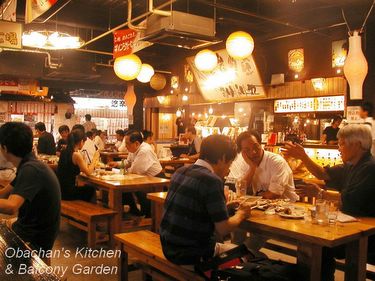
View from the South Entrance of Hirome Ichiba

Hirome ichiba (market) is one of my most favorite places in Kochi. This spot is often introduced as a “food court” on the net, but in my opinion, it is much more than that. It is where you can encounter things new to you, and people new to you, and at the same time feel somewhat at home.


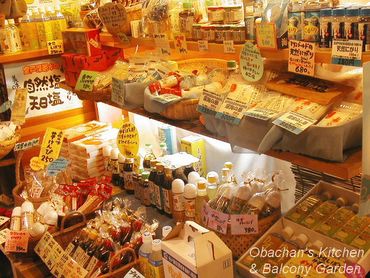
Local goods (salad dressings, soy sauce, salt, etc.) on the shelf at a souvenir shop

I stumbled into this place for the first time when I returned to Kochi in 2000 after living in Kansai for about 20 years. According to its official website, Hirome ichiba was founded in 1998 as a new sightseeing spot. In addition to making it a place to introduce local cultures to both visitors and local people, they wanted it to be a place for people to socialize in a friendly, down-to-earth kind of atmosphere. So among the more than 60 shops in this market, you see shops like a greengrocer, fish shop, meat shop, souvenir shop, craft shop and even a small computer school as well as izakayas and various eateries.

Read More


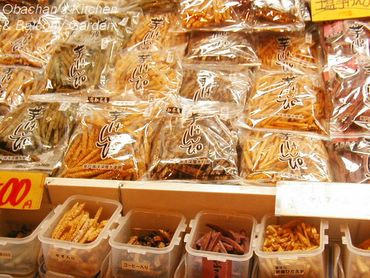
One of our local traditional sweets: Imo Kenpi (Deep-fried potato strips) with various flavors incl. yuzu, sesame, coffee, garlic, green laver flakes, etc… and they say deep-sea water was used somewhere in the cooking process.)


Deep-fried fish cakes in different shapes and colors


In the food court section, there are big wooden tables and benches surrounded by eating/drinking establishments offering variety of foods ranging from typical Kochi cuisine to spicy Southeast Asian dishes. It is a convenient place for locals to drop in alone and have lunch or supper (with some drinks if it's after work) for a reasonable price. For tourists, it is also a convenient place that is close to the 2 popular sightseeing spots, Kochi castle and the Sunday Market, and offers most of the local specialty dishes for a reasonable price.


You can taste typical local dishes at Hirome, including 鰹のタタキ(Katsuo no tataki or seared bonito, the ultimate local food that Kochi is famous for). One shop that recently opened in the market even shows the searing process to the customers. It is said that burning rice straw produces the best temperature for searing bonito, and at this place you can see the cook throwing some straw into fire to make a big flame to sear your bonito. For more adventurous tourists, they have delicacies like ウツボの唐揚げ(Utsubo-no Karaage: deep-fried moray eel), どろめ (Dorome: raw baby sardines, usually served with dressing made from miso and garlic-leaf paste) and 酒盗(Shuto: salted bonito guts). I have never tried any of those.

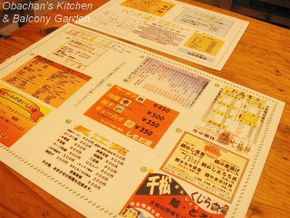
A menu and the map of the market are placed on each of the big wooden tables there. You can choose from the menu and go to any of the eateries (they have menu and often food photos/ samples there) and order what you want, then if they're not too busy, they may ask you where your table is and “deliver” the food to you when it’s ready. One shop even lists their phone number on the menu so that you can call them with a cell phone from your table and order food. Unfortunately they don’t have any English menu in Hirome yet. When you finished eating/drinking, you can just leave empty dishes and glasses on the table. Those on dish crew would come around with a cart and pick them up.


The place turns into a more friendly place with somewhat "borderless(?)" atmosphere at night as many drinking places in the market open. People drink and chat cheerfully with their friends, and sometimes even with those who they met for the first time there. That’s the magic of the place, I think… I don’t know if it’s the size and alignment of those wooden tables and benches that make people feel easier to mingle?? Anyway, except for the very crowded times, I feel comfortable just dropping by and taking a seat there all by myself to have a drink. A couple of times, a cheerfully intoxicated person came to talk to me, and I didn't feel disgusted or scared… I just enjoyed chatting. There’s something in the atmosphere there that makes me feel it’s OK for such things to happen.

Or maybe I feel so attached to Hirome ichiba because I’ve been to the big dance parties held there several times a year. Every year they have events like Halloween party, St. Valentine’s Day party, etc. starting at around 11:30pm after closing the shops in the market, and all the partygoers, both non-Japanese and Japanese, get together to drink, dance and have a ball.

Hirome Ichiba Market
2-3-1 Obiya-machi, Kochi
Kochi 780-0841
Official website --- http://www.hirome.co.jp (Japanese only)

Sunday, July 10, 2005

Ooops! -- Matcha Custard Pudding --


Matcha Custard Pudding

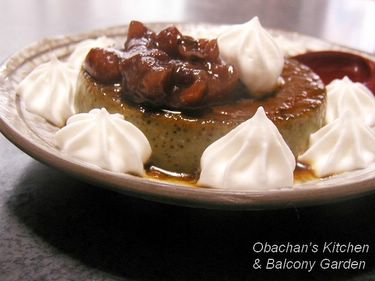
OK, I wouldn’t call this a total mess, but I couldn't help saying “OMG!” when this came out from the custard cup and landed on the plate. I didn’t expect it to turn out this flat.

Wondering what this is? It is, actually, matcha custard pudding made from soy milk, egg, sugar and matcha (ground green tea). Would have tasted much better if it wasn’t overdone and laughably short like this.

Well, I’ll do better next time ;P

Saturday, July 09, 2005

OK, Let's Talk about Bento

The topic has been brought up in the comments to my previous post, so why not ;)

298-yen bentos

Bento means packed lunch or packed meal in Japanese. Those you see in the photo above are the 298-yen (apx. US$2.66 ?) bentos at a supermarket not too far from my apartment. Yep, all these are 298 yen each. I wouldn’t say they are very tasty, but with this low price, how can you complain?

Talking about bento, there are roughly 2 types of bento places around here --- where they sell pre-packed cold bentos (though they can warm them up there with microwave) and where they pack warm bento after you order one at the counter there. The supermarkets and convenience stores fall into the former category. The latter, franchised bento shops, used to be my favorite but not so much any more.

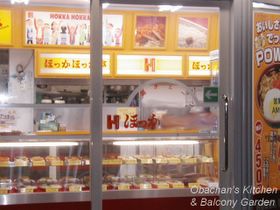
This is one of the bento shops near my apartment that sell warm bentos. There, you take a look at the samples in the showcase and order the one(s) you like, then take a seat in the shop and wait. The part-timers there of course do not cook everything from scratch after you made an order… most of the food is prepared or pre-seasoned already and all that’s left to do is to deep fry or grill or heat it. So the waiting time can be around 5 minutes or less… well, depending on what and how many of the bentos you order.

Read More


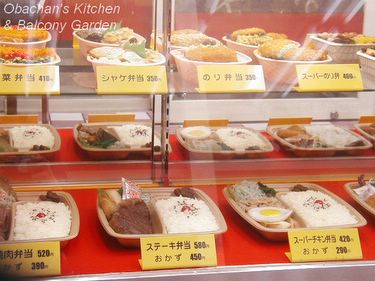
Samples in the showcase

You noticed some samples have 2 prices in the tag? The top one is the price of the bento with warm rice, and the one at the bottom is the price without rice. If you already have some cooked rice at home, you can buy a bento without rice and make it even cheaper. Good idea, isn’t it?


Nori-ben

This nori bento (called “Nori-ben” for short) literally means “bento with dried seaweed (nori).” When this type of franchise shops became popular in Japan, this nori-ben was the most popular menu because it was the cheapest one and yet quite filling, though lacking in vitamins. “I’m going to have nori-ben.” or “I live on nori-ben” was synonymous with “I’m broke now,” ...well... at least among my friends.

In earlier days, in a typical nori-ben, you didn’t see anything more than soy-sauce seasoned bonito flakes all over the rice covered with a big sheet of dried seaweed. Oh, maybe a few slices of pickles were on the rice. This one in the photo is a little upgraded version, thus could be a little smaller than the earlier versions, I suppose.

Of course, other than the bentos in plastic containers like these, we have more elaborate, expensive kind of bentos in Japan if you don’t mind paying good amount of money. Those are the ones from famous traditional Japanese restaurants. I cannot afford to blog about them right now, but maybe someday I would give it a try.
…. Hopefully.

Wednesday, July 06, 2005

Open Sandwich


Open Sandwich

Light lunch today: An open sandwich with avocado, pastrami, tomato, basil, cream cheese and lemon on a slice of baguette.
Tasted good, but did not fully satisfy my appetite, unfortunately.

Monday, July 04, 2005

Garden Report -July 2005

My herbs are definitely doing much better this year!

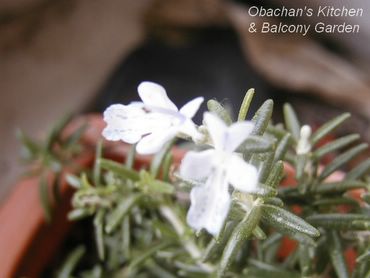
Rosemary

I was so happy when I found these little white flowers. Aren’t they lovely?


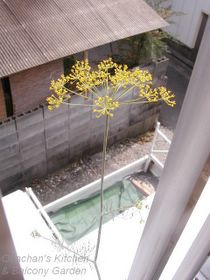
Dill

Last year I planted dill too late, and it was almost dead already in late July (before blooming) because of the heat. This year, see how my dill plants bloomed! Looks like I can expect to get some dill seeds. It would be nice to use them for making pickles, maybe? :)


Sweet Marjoram? and Parsley


Rhubarb and Lemongrass

I'm also very happy with the way these herbs are now. I guess the fertilizer worked for the rhubarb. Thanks for your advice, MrsT :D
The way this lemongrass grew was really amazing. It was like this in May and stayed that way until very recently. Seems like it really loved the rain we had for the past 4 or 5 days.

Saturday, July 02, 2005

Rosemary Scones


Rosemary Scones

The five cookbooks meme I posted the other day inspired me to try one of the recipes in the “Kantan Scones (Easy Scones)”which I didn't even open for months. What I wanted to make for brunch today was herb scones.

Though the recipe called for mint, I used rosemary.

The problem I had with this recipe was that after I downsized it to half, the amount of egg I was supposed to use turned out to be "1/4 egg." The sloppy eye-estimation did not work too well this time… I ended up adding a little too much egg ;P
The scones were still very tasty, though, with a little bit of butter and manuka honey :D

Friday, July 01, 2005

Food at Wanuke-Sama

I went to a nearby shrine for a religious festival called “Wanuke-sama.” It is held on the last day of June every year in and around Kochi city (I guess??). For more information about this festival, click here.

For me, (and maybe for many of you, too) one of the biggest attractions of any festival is the food stalls. Of course, I took some photos to share!


Ika-yaki (Grilled Squid)
You can smell this even from a distance! The squid on the skewers were dipped in sweet and salty teriyaki-style sauce and grilled. Hmmmmm…!!!!


Wataame or Watagashi (Cotton Candy)
I almost never buy one these days, but I enjoy watching the cartoon characters on the wrapping bags.


An obachan (not me) pouring strawberry syrup over shaved ice
It was so hot and humid, so there was a long waiting line in front of this stall.


Hashi-maki
For those who know what okonomiyaki is, this is thin okonomiyaki wrapped around chopsticks. Toppings are sauce, mayonnaise, thin strips of nori (dried seaweed) and kinshi tamago (thin-sliced egg sheet). Yum!


Corn on the Cob
I bought one of these today. Some soy-sauce based sweet and salty sauce was brushed on the corn. It was so sweet and juicy. Great with a can of low-malt beer! :D

Well, hope I can live the rest of this year staying healthy and full of energy!

Thursday, June 30, 2005

The Cook Next Door

Umami tagged me for this “The Cook Next Door” meme a few days ago and I thoroughly enjoyed it. Thanks Nicky for starting this meme! I had so much fun going through my memories of the past.

What is your first memory of baking/cooking on your own?
My first cooking: Japanese-style curry & rice that I made when I was 10 or 11 years old. One night my mom had to attend a work-related party until late at night, and asked me to cook curry & rice for the whole family for supper. It was a reasonable choice, because instant curry roux was already popular in Japan, so all I had to do was to dice vegetables, cut meat into bite size, sauté them, add water and boil until potatoes are done, then dissolve instant roux. Easy enough.

Mom wrote down instructions on a piece of paper and left it to me. When I read it, it said, “Boil with half pot of water,” but did not specify which pot. I used the biggest pot in the kitchen. Though I added the whole package of the instant roux, the curry did not thicken no matter how long I simmered it, and the runny yellowish thin soup didn’t have much of the curry taste. I ran to the backyard and cried under a persimmon tree there. Later mom came home with omiyage sushi pack for the family (I guess dad called and told her about the supper), but I felt too miserably hurt so I refused to eat the sushi and went to bed. Around midnight I woke up being hungry, sneaked into the kitchen and ate some leftover rice with pickles.

Who had the most influence on your cooking?
Definitely my mom. She had a strange pride in not using a measuring cup or measuring spoons for cooking, and strictly taught me to use eye estimation only. See why I always have trouble posting recipes for the Japanese dishes I cook?

Do you have an old photo as “evidence” of an early exposure to the culinary world and would you like to share it?
There must be one at my parents’ house. I’ll take a look and post about it after I visit my parents this summer.

Mageiricophobia - do you suffer from any cooking phobia, a dish that makes your palms sweat?
I don’t know if this is a proper example, but when I was going through repeated experiments for zucchini bread last year, just seeing zucchinis on the shelf at the store made me feel pain in my stomach. Details here. It’s completely cured now, thank goodness. ;)

What would be your most valued or used kitchen gadgets and/or what was the biggest letdown?
Good appliance: Analogue kitchen scale.
Biggest disappointment: A cheap manual hand blender I bought at a garage sale. When I used it, I had to hold the bowl with one hand, hold the blender with the other, and needed a third hand to rotate the handle.

Name some funny or weird food combinations/dishes you really like - and probably no one else!
1. Cottage cheese with soy sauce / Cream cheese with soy sauce.
2. Grape jelly with breakfast sausage muffin

What are the three eatables or dishes you simply don’t want to live without?
1. Rice, Coffee * (<--Added Jul. 2 )
2. Takoyaki (Octpus Balls)
3. Unagi donburi or una-juu (grilled eel on rice)

Any question you missed in this meme, that you would have loved to answer? Well then, feel free to add one!
Three quickies:
Your favorite ice-cream…Rum and Raisin

You will probably never eat… Some kind of edible bugs I saw on TV.

Your own signature dish… There’s no such thing. I just love cooking & eating, but cannot cook anything very well, honestly.

Well, this time, I think all the cooks I wanted to tag are already tagged by someone. So I’m going to stop this here. Hope you don’t mind… or if anyone wants to be tagged by me, please leave a comment and let me know! :D

Tuesday, June 28, 2005

Molasses-Flavored Zucchini Bread


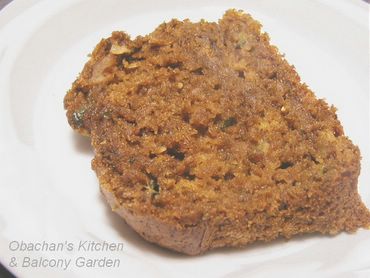
Zucchini Bread with Molasses

Concerning zucchini bread, I had 2 long-term goals that I wanted to achieve: one was to come up with a recipe of light-tasting breakfast zucchini bread, and the other was making one that tastes just like the very first zucchini bread I tasted in Pennsylvania about 20 years ago. Now that the first goal is almost satisfactory met, I’m up to the experiment for the second goal.

This time I replaced half of the amount of sugar in my Breakfast zucchini bread recipe with dark molasses. This idea had been in my mind for a long time while I was going through the repeated experiments in the past. The very first zucchini bread I tasted in the U.S. was very moist, and I had been wondering if molasses or honey was added. Also, another recipe I found on the net seemed to be supportive of my idea. At least, someone already tried it, which means it’s not a totally crazy idea, right? So, with the Brer Rabbit molasses I bought last winter, I gave it a try.

The result --- Yes, the texture turned out to be a little closer to the first zucchini bread I had, but not exactly. More than anything, the one in Penn. didn’t have the strong smell of molasses like this. So definitely, dark molasses was not it. This molasses-flavored zucchini bread was not bad at all, though… Too bad I didn't have any raisins to add. It must have been perfect with raisins.

Read More

My zucchini bread story -part 2 –
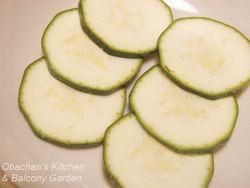
It was more than 15 years after my first encounter with zucchini bread that I actually baked one myself in Japan, using a recipe I got from an American friend of mine. I don’t remember if I followed the recipe perfectly at my first try—I only remember that I was so happy about making one myself, even though it didn’t taste like the one I had in Pennsylvania.

From the very beginning, however, the amount of sugar in the recipe scared me, -- 1 cup sugar for just a little more than 1 cup flour ! -- so I started cutting it down right away. Then the problem came in… I realized strange bitterness or harshness stayed on my tongue for a long time after eating the courgette bread. I’m not sure if I can call it ”bitterness.” It was not like that of bitter gourd… it was more like what happens to your tongue after eating too much pineapples , but not exactly the same.


The disturbing harshness became more apparent as I reduced the amount of sugar to make it “healthier.” I had no idea where it came from. Zucchini? Baking powder? Spices? Or possibly, the walnuts? Or the Japanese salt that contained more bittern (nigari) because I always added a pinch of salt? I kept experimenting, changing the amount of ingredients each time, except for increasing the amount of sugar. I only thought about cutting down the amount of the thing that was causing the harshness, not hiding the problem with increased sweetness. But nothing worked. My zucchini bread always had disturbing harshness!
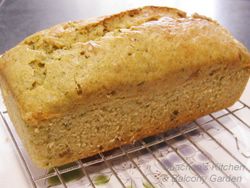
After coming back to Kochi, I continued the experiment whenever zucchinis were available, but no progress --- or it got even worse. One day I brought my zucchini bread to a Japanese friend who wanted to taste it, then she instantly gave me a negative reaction after one bite. The problem was, according to her, “Definitely too much sugar and absolutely no zucchini flavor, and the terrible harshness.”

She insisted that since vegetable was used as the main ingredient, it HAD TO be a healthy bread with noticeable veggie flavor, otherwise there was no meaning in adding zucchini. Vanilla extract and cinnamon must be reduced, too, she said, because it must have killed the zucchini flavor. And the harshness must be removed by all means, she said. So there my struggle got worse. Imagine making a courgette bread cutting down all those ingredients! That made the annoying harshness more apparent.


All the zucchini bread recipes I found on the net didn’t say anything about the bitterness or harshness. I asked around on the net, but the answers I got were “I’ve never had such a problem.” "I don't know what bitterness you're talking about." I felt overwhelmed, but now that there’s someone else who’s waiting for the result of my experiment, I couldn’t give it up. Finally the mere sight of zucchini started causing a pain in my stomach. I’m not kidding.
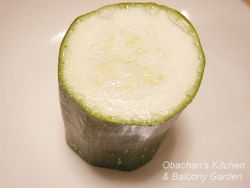
I could have just told my friend, “That’s the way zucchini bread is. If you don’t like it, just don’t eat it.” However, I myself wanted a mild-tasting, less-sweet zucchini bread that would be good for breakfast, so I just didn’t want to give up.


Then last summer, I came up with an idea when I was making bitter-gourd stir fry. From several cooking magazines, I had learned that rubbing a bitter gourd with salt would reduce its bitterness. Can’t it work for my zucchini bread, if the bitterness/harshness was coming from the zucchini? What if I rub the zucchini with salt before grating it? I gave it a try…
… and IT WORKED! :D

Finally, I made a zucchini bread with less amount of sugar, oil and spices with no harsh aftertaste!
When I tried it with a bowl of tomato soup, as I had dreamed about, I was simply overjoyed.

To be cont'd.

Saturday, June 25, 2005

The Rest of the Kabocha was...


Kabocha no Nimono (Simmered pumpkin)

It was used for this simmered dish. Yes, I'm talking about the kabocha pumpkin from my parents' veg. garden --- the one that I used for the casserole the other day.

This is the way my mom simmers kabocha pumpkins and I should warn you that it is not a typical way in Japan. She uses chicken and another ingredient in addition to kabocha.

This is the “another ingredient” which we call kakuten or hiraten around here. It means square tempura or flat tempura, but in this case the “tempura” does not mean “batter-fried food” as is commonly known. This tempura means “deep-fried fish paste.”

These additional ingredients, chicken and deep-fried fish paste, give so much extra flavors to kabocha and my family loves it. I admit that this is a rather heavy and mushy dish that people in the countryside tend to make…you probably won’t see something like this in a sophisticated Japanese restaurant. Actually I once asked around among my Japanese friends, and only some of them said they would add chicken to simmer kabocha, but no one said they would add this kind of tempura.
Then this could be my mom’s original?? ;P

Thursday, June 23, 2005

Five Cookbooks Meme

AugustusGloop gave me a chance to do something I’ve never thought of doing: taking photos of my cookbooks :) Yep, she tagged me for this Five Favorite Cookbooks Meme.

Unfortunately my cookbook collection is miserably slim, to tell you the truth. I’m no gourmet, no chef, --- I’m just an obachan who cooks/bakes to feed myself every day because no one else does it for me. “On sale” is my favorite word and I largely depend on the internet or browsing magazines at bookstores lately to get recipes and ideas because it’s CHEAPER that way. Therefore, I have nothing impressive and I’m almost embarrassed.

But I also thought that it wouldn’t hurt to give this a try just to re-discover what I have --- just for my personal fun. So, here’s what I have. I don’t know if this is interesting to anyone, but I had fun doint this, after all.
Read More

1. Total Number of Cookbooks I’ve owned:
Less than 10 ? maybe.

2. Last Cookbook I bought:
Dessert Cellection-7- Kantan Scones (Easy Scones) by Daiso (In Japanese)
A thin, pamphlet-like book you can buy for 100-yen at the ever-famous Daiso 100-yen shop. I wanted the herb scones recipe in this book.

3. Last foodbook I read:
Men’ekiryoku wo Ageru Shoku no Hon (Foods that Enhance Your Immunity???) by Orange Page

4. Five Cookbooks that mean a lot to me:
I don't know if I can say "a lot" but yes, these are my favorites with some special memories.

The Basics of Cooking Series (in Japanese) that my mom had. Especially the vol. “Desserts and Breads” was like my dream book. Watching the pics of foreign desserts and imagining how they’d taste like was my favorite pastime in childhood.

The Garnish (Kazari Giri) by Mac (In Japanese)
Actually I didn’t buy this book. I stole it from my mom’s bookshelf. This must have been a giveaway instruction book that came with a kitchen knife set. Good book with tons of instructions for cutting vegs/fruits into beautiful shapes.

Itsudemo Muffin - Muffins & Quick Breads – by Asa Shiokawa, Bunka Shuppan sha. (In Japanese)
Very dependable book. I owe this one a lot.

Women’s Circle – For Cooks on the Go – P.S.I. & Assocites, Inc.
I bought this at a garage sale or something in Miss. and brought back to Japan more than 10 years ago. This not only makes me feel nostalgic, but does have good quick recipes, I think… BTW, I was not the only one who did this much damage to this magazine. Sending it with bunch of hardcover textbooks by M-bag surface rate was probably a cruel thing to do :P

The Chicken Cookbook -37th National Chicken Cooking Contest Winning Recipes - National Broiler Council :D :D :D
Another book I brought back from the U.S. This contest was held in Jackson, Mississippi, according to this book. Many of the recipes are so unique that I can hardly imagine what they would taste like. They really tickle my curiosity :)

5. Which 5 people would you most like to see fill this out in their blog?
Well, looks like many of my blog friends are already tagged, so I'm going to tag only 2 people instead of 5. Hope this is OK.
Rae of Bunnyfoot, and
Winslow of Seven Kinds of Soy Sauce
Hope they don't mind my tagging them.