Saturday, June 25, 2005

The Rest of the Kabocha was...


Kabocha no Nimono (Simmered pumpkin)

It was used for this simmered dish. Yes, I'm talking about the kabocha pumpkin from my parents' veg. garden --- the one that I used for the casserole the other day.

This is the way my mom simmers kabocha pumpkins and I should warn you that it is not a typical way in Japan. She uses chicken and another ingredient in addition to kabocha.

This is the “another ingredient” which we call kakuten or hiraten around here. It means square tempura or flat tempura, but in this case the “tempura” does not mean “batter-fried food” as is commonly known. This tempura means “deep-fried fish paste.”

These additional ingredients, chicken and deep-fried fish paste, give so much extra flavors to kabocha and my family loves it. I admit that this is a rather heavy and mushy dish that people in the countryside tend to make…you probably won’t see something like this in a sophisticated Japanese restaurant. Actually I once asked around among my Japanese friends, and only some of them said they would add chicken to simmer kabocha, but no one said they would add this kind of tempura.
Then this could be my mom’s original?? ;P

Thursday, June 23, 2005

Five Cookbooks Meme

AugustusGloop gave me a chance to do something I’ve never thought of doing: taking photos of my cookbooks :) Yep, she tagged me for this Five Favorite Cookbooks Meme.

Unfortunately my cookbook collection is miserably slim, to tell you the truth. I’m no gourmet, no chef, --- I’m just an obachan who cooks/bakes to feed myself every day because no one else does it for me. “On sale” is my favorite word and I largely depend on the internet or browsing magazines at bookstores lately to get recipes and ideas because it’s CHEAPER that way. Therefore, I have nothing impressive and I’m almost embarrassed.

But I also thought that it wouldn’t hurt to give this a try just to re-discover what I have --- just for my personal fun. So, here’s what I have. I don’t know if this is interesting to anyone, but I had fun doint this, after all.

Read More

1. Total Number of Cookbooks I’ve owned:
Less than 10 ? maybe.

2. Last Cookbook I bought:
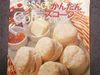
Dessert Cellection-7- Kantan Scones (Easy Scones) by Daiso (In Japanese)
A thin, pamphlet-like book you can buy for 100-yen at the ever-famous Daiso 100-yen shop. I wanted the herb scones recipe in this book.

3. Last foodbook I read:
Men’ekiryoku wo Ageru Shoku no Hon (Foods that Enhance Your Immunity???) by Orange Page

4. Five Cookbooks that mean a lot to me:
I don't know if I can say "a lot" but yes, these are my favorites with some special memories.

The Basics of Cooking Series (in Japanese) that my mom had. Especially the vol. “Desserts and Breads” was like my dream book. Watching the pics of foreign desserts and imagining how they’d taste like was my favorite pastime in childhood.

The Garnish (Kazari Giri) by Mac (In Japanese)
Actually I didn’t buy this book. I stole it from my mom’s bookshelf. This must have been a giveaway instruction book that came with a kitchen knife set. Good book with tons of instructions for cutting vegs/fruits into beautiful shapes.

Itsudemo Muffin - Muffins & Quick Breads – by Asa Shiokawa, Bunka Shuppan sha. (In Japanese)
Very dependable book. I owe this one a lot.

Women’s Circle – For Cooks on the Go – P.S.I. & Assocites, Inc.
I bought this at a garage sale or something in Miss. and brought back to Japan more than 10 years ago. This not only makes me feel nostalgic, but does have good quick recipes, I think… BTW, I was not the only one who did this much damage to this magazine. Sending it with bunch of hardcover textbooks by M-bag surface rate was probably a cruel thing to do :P

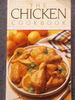
The Chicken Cookbook -37th National Chicken Cooking Contest Winning Recipes - National Broiler Council :D :D :D
Another book I brought back from the U.S. This contest was held in Jackson, Mississippi, according to this book. Many of the recipes are so unique that I can hardly imagine what they would taste like. They really tickle my curiosity :)

5. Which 5 people would you most like to see fill this out in their blog?
Well, looks like many of my blog friends are already tagged, so I'm going to tag only 2 people instead of 5. Hope this is OK.
Rae of Bunnyfoot, and
Winslow of Seven Kinds of Soy Sauce
Hope they don't mind my tagging them.

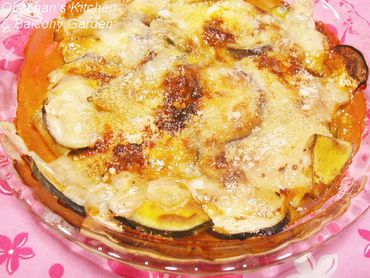
Eggplant Zucchini & Kabocha Pumpkin Casserole


Eggplant Zucchini and Kabocha Pumpkin Casserole

This small kabocha is, again, from my parents’ veg. garden. My mom brought it with the tomatoes last weekend. With the eggplants and zucchini I had left from the other day, I, again, went for the quick and easy solution for leftover vegetables --- cheese casserole.

It was so easy to make with store-bought pizza sauce. All I had to do was just slicing the vegetables and placing them in layers with tomato sauce and sliced cheese. (I added a little cream, too.) I was also very happy to use up the grated parmesan cheese that I had in the fridge for quite a while.

The casserole was OK, but one thing I would do differently next time is the amount of pumpkin to use --- either keep it to the minimum or not use it at all. The pumpkin I got from mom was what we call “kuri-kabocha” here, which has very sweet, nutty flavor and chestnut-like texture, so it made the whole dish rather too sweet and heavy. It definitely killed the subtle sweetness of the zucchini. :(

Tuesday, June 21, 2005

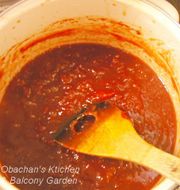
Pleasant Surprise! - Tomato Jam -


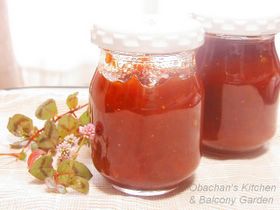
Tomato Jam on Toasts

Well, how about this Japanese kissaten-style “morning set”-like toast? (Oh, of course they don’t decorate their “morning set” with roadside weeds like this ;P) On the thick slices of bread, which is very Japanese, is the tomato jam I made for the first time in my life!

The combination of sugar and tomatoes was not totally new to me. When I was a kid, tomatoes were not very sweet or tasty even when they were ripe. It was rather rare to find kids who say “I like tomatoes.” Some elders in the countryside, including my grandparents, sprinkled bunch of sugar all over when they eat tomatoes, and I followed them, too. (I don't do that any more now.)

Nevertheless, the idea of making jam out of tomatoes didn’t sound so tempting to me at first. Even with my childhood experience, I couldn’t imagine what it would taste like. Sure it must be sweet… because it’s jam, but… I had no idea how much of the tomato flavor would remain and go with the sweetness.

Read More

Then last weekend my mom came and brought me some of the big, ripe tomatoes that one of our relatives had given to my parents. They were very ripe and I was 100% sure that I would end up throwing away more than half of them if I didn’t eat them up within a couple of days. The best solution seemed to be cooking them. Maybe tomato sauce? I’m planning some gumbo recipe exploration this summer, so tomato sauce would be really useful. But… another voice inside of me said “Hey it’s the best chance to find out what tomato jam would taste like!!” And the voice finally won.

Making tomato jam was pretty easy, much easier than the marmalade I made before. The only problem was that I made my jam a little too sweet. The recipe (in Japanese) said 200 – 300g sugar for 1kg of tomatoes, and I used 230g sugar for a little less than 1kg tomatoes. Plus, I added a little pectin powder at the end. I forgot about this at that time but our store-bought pectin powder is already mixed with sugar, so it added extra sweetness to my jam.

I’m not reluctant to call this result a success, though. It tastes fine with buttered toast. Would be nice for tarts and pies, too, if combined with something sour. There seem to be some other interesting ideas on the net such as adding black pepper or ginger to tomato jam. Hmmmm…This is going to give me lots of fun this summer!

I’m glad that I gave this a try :)

* I couldn't wait until the next time, so I already tried adding some ground black pepper to the jam. I definitely like it BETTER with the black pepper!!


*Apologies*

*Apologies*
It seems that this blog had been very unfriendly to IE users for the past several days. Unfortunately I didn’t notice the problem because I use Firefox most of the time.

Now the problem is fixed. (Thanks, Rachel :))

Sorry about the inconvenience.

Monday, June 20, 2005

How Many Milliliters Are in 1 Cup in Your Country?

This question was originally included at the bottom of my Biwa Tarts entry, but I’m going to keep this at the top of my blog for a while to get some more responses ;)
---
There's a question that I have always wanted to ask people in other countries (except US, UK, Canada and Australia, because for them I already know the answer.) The question is, "How many milliliter(cc)s are in 1cup in your country?" Through the conversions I had to do for foreign recipes in the past, I learned there were differences among countries. In Japan, 1C=200ml. I'm curious about how it is in other countries (except those countries listed above.) Can you help me with this small personal research?


* Web graphics by Sozaiya-san Romance *

Izakaya Menu 2 Yaki-nasu


Yaki-nasu

It’s been a while since I posted about the food we serve at the izakaya where I work last time. Here’s another one: Yaki-nasu (grilled eggplant).

We grill eggplants on a grid until tender, then cool immediately in water, peel, pat dry, make deep slits, sprinkle bonito flakes on top and serve with grated ginger and soy sauce (or dashi+soy sauce.)

As many cooks recommend, at our izakaya we grill eggplants directly over the flame of the gas stove. It is said that heating this way to burn the skin brings out better flavor and fragrance from the eggplants. The only thing is that you have to keep an old, dirty grid designated for this use only. (This photo was taken in my kitchen, but what we do at the izakaya is basically the same. My gas stove looks like this-- the one on top.)


At our izakaya, yaki-nasu is the menu for summer season only and we just started serving it last week. It has been my favorite since childhood. When I was small, the typical weekday lunch in my family in summer consisted of yaki-nasu, miso soup from breakfast, tofu and grilled himono (dried fish) with rice.

BTW, today I did another thing that I haven't done for a long time. I painted a watercolor.

Saturday, June 18, 2005

Macou's Bagel Sandwich - 2 -


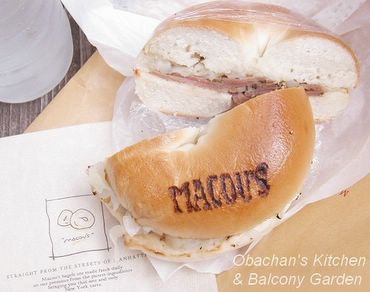
Pastrami Pork & Sauerkraut Bagel sandwich

Since I couldn’t stand watching the same old infomercials on TV orer and over, I decided to go out and have lunch in a nearby park. Some photos are posted here.

It was December last year that I had Macou’s bagel sandwich last time, and I decided it was about time to try another one. This time I got pastrami pork & sauerkraut with plain bagels. Sauerkraut with bagels?! Hmmm….why not. And it was not bad. I didn’t really see why it had to be pastrami pork instead of beef, though.

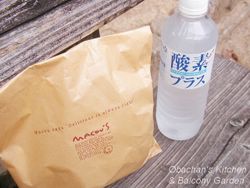
Curiosity made me buy this “oxygenized water” in the pet bottle. To be honest, I didn’t know what good it does to you until I googled a little last night. (There was no explanation on the bottle.) Now I learned things like these. Though very convincing, I don’t think I want to keep buying this expensive kind of water.

Friday, June 17, 2005

Asupara-maki Furai


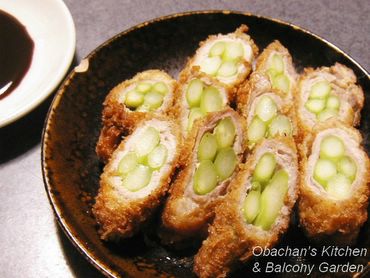
Asupara-maki-furai

Today’s supper. Maybe called “Asupara-maki-furai” in Japanese? Asparagus rolled in thinly-sliced pork, seasoned with sake, salt & pepper, breaded and deep-fried. Served with tonkatsu sauce. Pretty good.

Vitamin supply: Lettuce, tomato, avocado & cottage cheese salad with sesame dressing (expired. Ooops! )
Sorry, no picture.

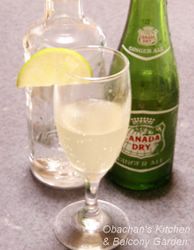
Moscow Mule


Moscow Mule

Today’s cocktail: Moscow Mule. Can you imagine how many places I had to go to find this ginger ale?


This is the “cocktail /salad-dressing shaker” that I bought at the 100-yen shop.
See? Didn't I tell you that it looks like a baby bottle?


Wednesday, June 15, 2005

Chicken Curry


Chicken Curry

** Another change. Thanks to Rachel, the expandable post problem is finally solved. Now my long posts in this blog have a "Read more" link at the end, and short ones do not. Thank you again, Rachel, and pinkcocoa for first giving me the link to "How to make expandable post" page. I'm so lucky to have nice blog friends like you guys. :D **

This was called ”Malaysian Chicken Curry” on the Japanese site that had the recipe. But I didn’t have most of the ingredients and omitted/substituted ingredients very bravery, so I assume the result I got was very different from what the recipe owner had intended ;P


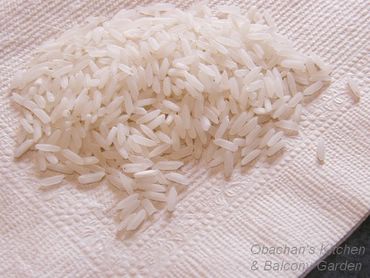
Indica Rice

One good thing about living here is that there is a rice shop, not too far from my apartment, which sells long grain rice. For fried rice or some kind of curry, I prefer Indica rice to Japanese short grain rice. It’s so nice to be able to buy it whenever I want and at a very low price ! :D

Tuesday, June 14, 2005

Breakfast Zucchini Bread


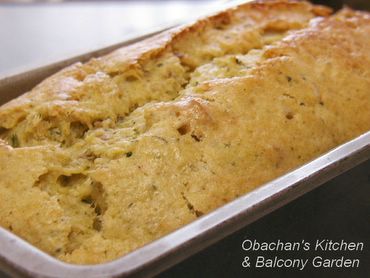
Zucchini Bread

Zucchini bread has become something very special to me in the past couple of years.

I’ve experimented quite a bit to come up with a recipe of very light-tasting zucchini bread that is good -- at least for me –- for breakfast. Unlike many Japanese people, I love having sweets for breakfast once in a while, such as pancakes with loads of maple syrup, sweet muffins, cinnamon rolls and so on. But when I thought about having zucchini bread for breakfast, I definitely wanted it to have a light taste so that it would go well with my favorite breakfast foods like sunny-side up, sausages, tomato soup, yogurt, juice and coffee. Somehow I saw zucchini bread as something along the line of cornbread... something to eat with meals.
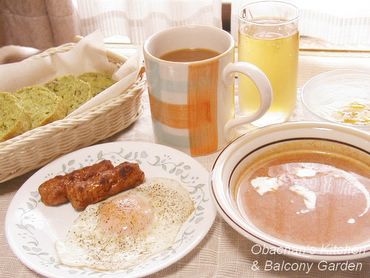

My Brunch. Sometimes I toast zucchini bread slices and spread butter on them.

I love eating this with cold soy milk. Recipe to follow.

Read More

BREAKFAST ZUCCHINI BREAD (formerly called OLE MISS SPECIAL)
** revised June 2009
* for 8 or 6 inch loaf pan
Ingredients
1 Tbsp. salt (to rub zucchini with)**
A)
1/2 to 2/3 cup sugar
1/4 cup vegetable oil
1 cup grated zucchini
1+1/2 eggs
vanilla extract
(a pinch salt)**
B)
1(+1/8 to 1/4) cup all-purpose flour*
1/8 tsp. baking soda
1/2 tsp. baking powder
a few dashes cinnamon
nutmeg (optional)
1/2 cup (or more, if desired) chopped walnuts

Sift B (except walnuts) together. Rub zucchini with salt (I use apx. 1 Tbsp) by rolling it on a cutting board until the skin becomes tender. Leave for a little while to let moisture beads form on the skin. Rinse well with water. Grate the zucchini to make one cupful, drain and squeeze gently to get excess juice out (but not too much). Mix A in a bowl. Add B to A and mix. Add walnuts. Pour in a greased or buttered loaf pan (8x4 or 6x3 inch) and bake at 375F (190C) for apx. 30 min.
* Adjust the amount of flour depending on how moist the grated zucchini is.

Actually, this is the recipe that I gave chika about a year ago before I started my own blogs. (A few minor additions were made in the recipe posted above.) At that time I was using a nickname, “ole miss” on some online message boards so I named my recipe “ole miss special.” ;P I thought my recipe deserved that name because I had worked so hard to come up with it.

Chika tried out my recipe, kindly said she liked it and posted about it on her blog. As many of us know well, she is such a nice person who is very fair and considerate of copyright. When she asked for my permission before posting the recipe on her site, I instantly okayed it (and sent her the recipe in Japanese). Oh, how thrilled I was to see my recipe on her site --- a foodblog from Hawaii written in English to be read by readers all over the world! :D And her directions are much better than mine. (See the comment section of her post.)
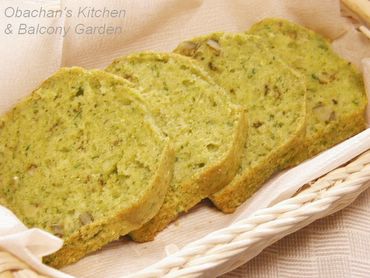


Because of its mild taste,
this breakfast version of courgette bread seems to have inspired some people to creatively give some twists and make their own versions. This year I’m going to experiment some more for a recipe of a sweeter & moister version which should be closer to the 1st zucchini bread I tasted in the U.S. long time ago.

There’s a lot I want to write about me and zucchini bread, including the reason why I rub zucchini with salt, but it’d be too long for a single entry. Since I’m going to make zucchini bread a few more times in this zucchini season, I’ll post just the “part 1” of the story here. The rest will be added to my forthcoming zucchini bread entries.

----
My zucchini bread story -- part 1 --
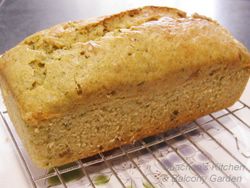
* My first encounter with zucchini bread was at an Easter dinner at my friend’s house in Pennsylvania, USA, back in 1984. There I tasted a slice of something that looked like pound cake, except it was green. And it was so sweet and moist and… something I had never tasted before. I asked my friend what it was, and she said, “Zucchini bread,” but I had no idea what zucchini was then. She also told me that it was her grandmother who made it.

According to my friend, her grandmother had lost her eyesight (because of a disease?) but she was an excellent baker, and no one in her family and extended families could make zucchini bread like her grandmother did.

I was so touched to witness how much everyone loved the grandmother. The moment I told her how great her zucchini bread was, her face brightened up with a smile. That was an unforgettable scene.

If I were as shameless as I am now, I would have asked her to give me the recipe. Unfortunately I wasn’t. Also I assumed that such an elaborate dessert would be too difficult for me to make and just chickend out. So that was all for my encounter with zucchini bread. I had no chance to eat or even see one for quite a while after that.

To be cont’d.

Saturday, June 11, 2005

Crab Rangoon with Ice-Cold Beer!!


Crab Rangoon and Ice-Cold Beer!

Can’t get any better than this!
Wasn’t there a TV commercial with this phrase long time ago? I don’t remember exactly…
Anyway, I gave it a try today. Crab Ragoon with ume (Japanese plum) jam and ice-cold beer (more precisely, low-malt beer). I’m currently TUI (Typing Under the Influence) so forgive me if I sound funny or don’t make any sense in this post.

I LOVE Crab Rangoons so much but I had to go through some hard times to get where I am now in making them. At first I tried to wrap the filling just like the way they did at a Chinese restaurant in a small town in Miss., USA that I stayed long time ago. They wrapped it by gathering the 4 corners of the wonton wrapper together at the top and pinching the edges togethrer tightly. It never worked when I did the same thing… the filling always came out from somewhere, no matter how carefully I sealed the wrapper, and made a terrible mess. You know what I mean? The mess? So after several trials & errors (I got burnt so many times!!), I settled down with this triangle shape.

I couldn’t find wonton wrappers at any of the nearby supermarkets today, so I bought spring-roll wrappers and cut them into smaller squares. For the filling I used cream cheese, minced green onions, soy sauce, garlic powder and canned crab meat. I didn’t measure anything so don’t ask me how much of those ingredients. I used 2 spring-roll wrappers for each crab rangoon for extra crunchiness. And it was sooooo GREAT!

The only disappointment was the ume jam... it wasn’t so great with Crab Rangoon as I had expected…it was just so-so. But the crunchy wrapper, creamy and garlicky filling and ice-cold beer!! … It was a real treat :D

Garden Report - June 2005 -


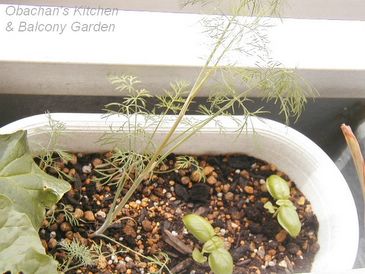
Dill looks OK, but maybe it is not a good idea to have it in the same planter with basil…??

My balcony garden in June:
Some are doing real good, some are just OK…

Read More

Japanese Pepper (Sansho)
A newcomer to my balcony garden purchased at the Sunday Market last weekend. According to the tag that was attached, this is supposed to be the kind that yields fruit. That’s what I had been looking for for a long time! The green fruits of sansho are so fragrant and you can mix them with dried baby sardines, season with soy sauce and other seasonings, mix into cooked white rice and make very tasty onigiri (rice balls). The lady who sold this to me said this may not start fruiting this year, though. Mmmmm… how many years would I have to wait until I make my dream onigiri….?


Parsley
My parsley is just doing fine. I always hated buying a bunch of parsley and using only part of it and wasting the rest. Soon I will be able to pick just as much as I need each time from this planter. No more waisting :)


Look! Blueberries!
Well, don’t ask me how many berries my “sunshine blue” has now… Looks like not many bees visited my balcony garden this spring. Most of the flowers just turned brown and fell, and that was it. I’d be really lucky if I would be able to pick 5 or 6 berries this year.


Rhubarb, Rosemary and scallion.
My rhubarb is definitely doing much better than last year. It was only about 5 cm tall in July last year, and couldn’t survive the heat in summer. This year I transplanted my rhubarb to a bigger planter in May and used fertilizer-mixed soil. Looks like it’s working. My rosemary is doing just fine, too.


Myoga ginger
The one that’s growing much better than I expected is this myoga ginger. There is a place near my parents' veg. garden where bunch of wild myoga grows. I dug up a few roots from there last winter, brought them back to my apartment and planted them in this pot. They say myoga can grow in a shade and needs little sunshine, but I was skeptical, so the way it is now is almost surprising to me. Can’t wait to see its lovely flower buds!


Thursday, June 09, 2005

Domestic Day - Red Beans & Rice with Tomato Cup Salad -

My complete day off. Working on defrosting my freezer since noon. Also made a special meal to celebrate my domestic day: Red beans and rice with tomato-cup salad. Even made a cocktail later, using the plastic“shaker”(looks more like a baby bottle to me) that I bought at a nearby 100-yen shop this morning.


Tomato Cup Salad

Cottage cheese mixed with chopped avocado, seasoned with French dressing stuffed in tomato cups. The minced parsley sprinkled on top is from my balcony garden. BTW, I’m a big cottage cheese lover, if I haven’t mentioned before. Especially love it with soy sauce. (My friends almost throw stones at me for that.)


Red Beans & Rice

Red beans and rice turned out good. Maybe a bit too much tomato flavor… I added the seeds and pulp from those tomato cups. Instead of Creole Seasoning, I always use Lawry’s seasoned pepper, garlic powder, cayenne pepper, paprika and thyme. That's the best I can get here. Even added a little tomato ketchup,too. That’s how I was taught in Miss. USA, so that's not my fault.

Read More


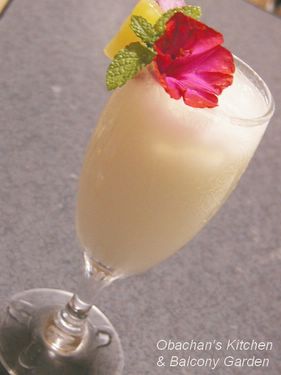
Pina Colada


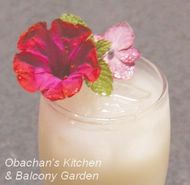
My first try. A small present to someone who cannot afford a trip to Bahama beach. Making cocktail is so much fun.
Japanese readers, I bet you can tell what flowers I used for this drink? Pathetic idea, ha?

-----
Well, now inside of my freezer looks clean as new. No frost, no mystery packs! The chicken stock I made today is being frozen in there. What does it mean to me?

- - Satisfaction - -
- - Peace of mind - -
(for limited time only.)

Time to take a shower, and some more cocktails afterwards.
Good night ;)

Tuesday, June 07, 2005

Hiyashi Ame (Cold Ginger Drink)


Hiyashi Ame (Cold Ginger Drink)

OK. To answer the repeated requests from one of my dear readers, here’s an entry of a Japanese summer drink, “hiyashi ame (cold ginger drink).” Perhaps those who live (or have lived) in Kanto area have never heard of this drink. It is said that hiyashi ame is a traditional drink known in the western half of Japan only.

Hiyashi Ame (Cold Ginger Drink)
Ingredients:
30g Ginger root (sliced)
20g Ginger root (grated) to get apx. 2 tsp. ginger juice
140 - 150g Malt sugar syrup
1 Tbsp Sugar
1 Teabag of black tea
400 cc Water

Squeeze grated ginger to get juice. Cook sliced ginger, malt sugar syrup, sugar and water in a sauce pan, stirring occasionally, and bring to boil. Reduce heat and simmer for another minute. Turn off heat. Put teabag in and leave until the sugar-ginger mixture turns amber. Remove teabag and sliced ginger. Add apx. 2 teaspoons of ginger juice. After cooling down, cool in the fridge. Serves 4 or 5.
(I can’t drink this much at one time, so I usually use small glasses.)

One thing you have to keep in mind is that new ginger roots just harvested this summer are not as strong as old ones. I used rather old ginger this time, but I would change the amount of ginger root slices and juice when I use new ginger roots. My recipe above is based on the one I found on a Japanese website, but I made some changes and still not 100% satisfied with my recipe. It was OK when I tasted while the drink was warm, but after cooling in the fridge overnight, it turned out stronger than I thought ;P

Read More

For making this drink, I think it is the best to add ginger juice little by little, tasting after each addition, and decide the amount you like. If you want it sweeter, you can add more sugar while the drink is still warm, or if you think it got too strong, you can add some water there.


I used black tea to give the drink an amber color, as introduced in the Japanese recipe, but I guess it is not a traditional way…because people did not have black tea in olden days in Japan. I don’t know how they colored hiyashi ame at that time. (Maybe they used dark malt sugar syrup.)

There is a small shop on the Sunday Market Street in Kochi that is famous for the hiyashi ame they serve there. It’s located very close to Kochi castle and you see many elder people playing shogi (Japanese chess) outside right next to the shop. The shop owner says his hiyashi ame recipe is a special one and he keeps it a secret.

Monday, June 06, 2005

Biwa (Loquat) Tarts & Ume Jam Tarts


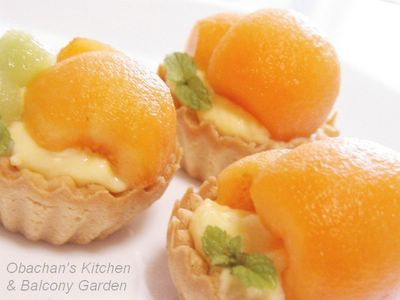
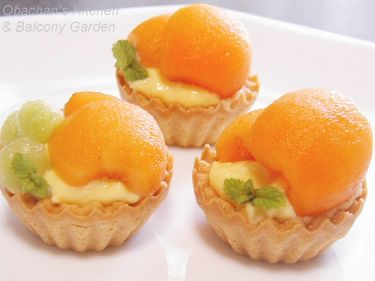
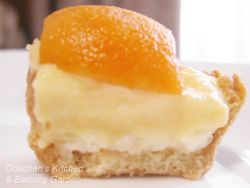
Biwa (Loquat) Tarts

Thanks to a fellow baker who gave me a recipe (in the comment) of perfect pastry cream, I enjoyed a great success with tarts today. This certainly made up for the traumatizing experience I had with the strawberry tart back in May!

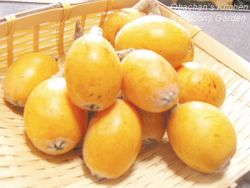
The loquats from my dad’s orchard that I got from mom last Thursday were going bad and needed to be used right away. An inner voice told me that it was a perfect chance to try the pastry cream recipe. And tata-!!
Don’t they look nice? They tasted nice, too!


Read More


Another Look (I want something else than mint leaves to garnish my sweets...)

I have a confession to make… I couldn’t find half-and-half, so I mixed whipping cream and milk to make a substitute. For the rest, I generally followed her recipe, except that I used a little less amount of salted butter and omitted the pinch of salt in the recipe. And you are right, a fellow baker, this is a very good, versatile pastry cream!

The only problem was that very ripe loquats are just so sweet, and with this sweet pastry cream, it was just uninterestingly plain sweet. I needed a twist with something a little sour. You know what I did? I still had some konatsu bavarois left in the fridge and I put a little amount of it at the bottom of the tart shell. (BTW, the tart shells were from the store. I was lazy.) I piled up the pastry cream on the konatsu bavarois and put loquat halves on top. The loquats were peeled, seeded and cut in half, then dipped in marsala wine briefly. Yes, another twist. And those twists worked just fine!! The slightly sour Konatsu bavarois, the sweet pastry cream and fresh loquat made a perfect combination with a crispy tart shell. It was oh so heavenly!!


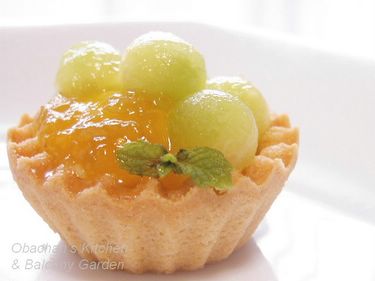
Ume (Japanese plum) Jam & Melon Tart

I experimented another combination: the pastry cream, melon, and ume jam that I made the other day! At first I thought the ume jam had a little harshness left, but maybe it was because I tasted it while it was still warm. On the next day, I noticed no harshness at all and I’ve been enjoying the ume jam with yogurt almost every morning. The jam also went well with this pastry cream! BINGO!

You know what I really want to try this ume jam with next?
Crab Rangoon. I always thought that apricot sauce was a bit too sweet to eat with crab rangoon, but this Ume jam would be perfect for me. I have some other ideas for the use of ume jam. Hmmm…maybe I’ll need to make another batch pretty soon.

BTW, It's so difficult to eat a tart with piled up cream and fruits in a cookie-type tart shell gracefully, isn't it?

---
There's a question that I have always wanted to ask people in other countries (except US, UK, Canada and Australia, because for them I already know the answer.) The question is, "How many milliliter(cc)s are in 1cup in your country?" Through the conversions I had to do for foreign recipes in the past, I learned there were differences among countries. In Japan, 1C=200ml. I'm curious about how it is in other countries (except those countries listed above.) Can you help me with this small personal research?

*I made those tarts yesterday after coming back from the Sunday Market, but posted this entry today.