Thursday, September 01, 2005

Vietnamese Coconut Lemongrass Chicken
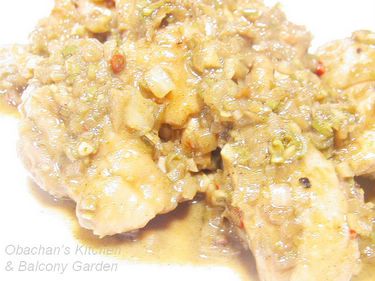

Vietnamese Coconut Lemongrass Chicken
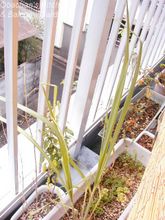
Seems like my lemongrass loves this hot and humid climate here in Kochi. It is now taller than any other plant in my balcony garden. Hmmm… why haven’t I used this for cooking at all yet? Did I plant it to watch it grow taller and taller? No way. When I bought the young plant of lemongrass, I was really looking forward to trying some new Asian recipes this summer. What happened to my enthusiasm…???


Well, summer is about to be over, and it was this recipe that finally made me decide to use the lemongrass for cooking. I wasn’t looking for a recipe when I found the recipe --- I accidentally came across with that site. Then I thought, “Hey, wait a minute… Why not?”

I downsized the recipe, as usual, and did not measure the amount of liquid seasonings very carefully, so the lemongrass chicken I made this time was probably far from what it should have been. I hope the recipe owner and Vietnamese people don’t feel offended. It tasted alright… but I guess I'd prefer a simpler lemongrass chicken recipe without coconut milk and curry powder.
Well... maybe next time.

Sunday, August 28, 2005

Almost There... Peach Cobbler


Peach (Nectarine) Cobbler

It has been my custom to make fresh peach cobbler at least once every summer since I came back to Kochi in 2000. Every time I tried a different recipe, and every time I thought “Well… not bad, but…” The problem was that I couldn’t find fresh yellow peaches and I didn’t want too-sweet canned stuff, so I always used white peaches. I love fresh white peaces so much, but when baked in a cobbler, I felt that something was not quite right. They didn’t go well with brown sugar as much as I had expected and I always preferred eating them raw. So this time I decided to use nectarines instead.

Nectarines were on sale yesterday at the supermarket I always shop at. They were pitiful ones--- already turning brownish even though they were not quite ripe --- but I thought it wouldn’t matter too much when baked in a cobbler.

I found this recipe on the net this afternoon and scaled it in half. I guess I didn’t make a mistake in calculation or conversion this time. I had to throw away some bad parts of the nectarines, but I had enough left for my half-sized cobbler. While it was in the oven, the wonderful smell of cinnamon and sugar filled my kitchen, and I realized that it was about a month ago when my kitchen was filled with the aroma from baking last time!

It turned out pretty good. :D Using nectarines was definitely a right choice and I liked this recipe. Well, there’s actually a few things that I’d do differently next time: I’ll reduce the amount of brown sugar, add a bit more lemon juice and slice nectarines into thicker wedges so that I can enjoy their texture better. Also, I might use milk instead of hot water for the crust. But I’m glad I found this recipe. For some reason, I like “crust-on-top” peach cobbler recipes better than “peach-on-top” ones.

Too bad that the nearby supermarket ran out of vanilla ice cream today!! Next time, I’ll make a bit less sweet version of this nectarine cobbler and, when I eat it, put a big scoop of ice cream on top while the cobbler is still warm… Hmmmmmmm!!!.

For now I’m enjoying it with cool, crisp iced tea.
Ah... heavenly. ;)

Saturday, August 27, 2005

Peach & Cottage Cheese Salad


Peach & Cottage Cheese Salad

When I posted about my ruby red grapefruit & cottage cheese salad, carlyn gave me an idea, in her comment, of making the same kind of salad with peach. So I tried it out for my brunch this morning.

I think the lemon juice really played an important role in this otherwise just-sweet dressing. The overall sweetness with the soft texture of ripe peach gently woke up my sleepy stomach and it was a nice way to start the day. :)

Friday, August 26, 2005

Mom's Home-made Tokoroten (Agar noodles?)


Tokoroten

My mom called me up last night and said she would bring me some home-made tokoroten today when she comes to Kochi city for a tea ceremony meeting. I met her in front of a train station this afternoon to receive a tiny cooler box with tokoroten and bunch of ice cubes and coolants stuffed inside.

So what the heck is tokoroten anyway? OK, it’s jelly-like noodles… or should I say noodle-like jelly, or maybe, agar noodles?

To make home-made tokoroten, you first need to get dried tengusa, a type of seaweed. (Of course it's easier to use dried kanten-bars or kanten powders. They are dried form of gelatin from the seaweed.) Well, my mom really made the tokoroten from scratch this time; she picked tengusa seaweed every time she went to the beach this summer, dried it and kept it somewhere in the house for about a month. She really loves doing things like that, but I do hope she stored the dried tengusa somewhere far away from kitchen this summer …because it really STINKS!!
(The photo shows someone's tengusa bing dried, not my mom's.)

Read More

To make tokoroten from scratch, you soak dried tengusa in water first, and then boil it in water to which a little vinegar added. When the water thickens with the gelatin from the seaweed, strain it to remove the seaweed and pour the glue-like soup into a vat and refrigerate. I read somewhere that leaving it at room temperature to let it settle makes better-tasting tokoroten, but I don’t know if it’s true or not.

This is the tokoroten I got from mom today. Now I'll show you how to make these tokoroten chunks into noodles.


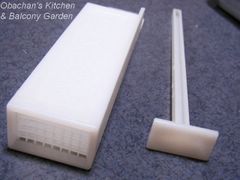
To do that, you need a special devise.


As you can probably figure out from the way this devise looks, the process is pretty straightforward.

You slip a tokoroten jelly chunk into this device


and push it with the bar with a flat top.


Then, tata~!


You can eat tokoroten noodles with either sweet sauce or soy-vinegar sauce. I like soy-vinegar version better, with a bit of grated ginger and aonori ( green laver) maybe?

This summer, tokoroten became suddenly popular throughout Japan and almost all the stores ran out of this summer food at one point. The reason was (I think) a TV show that introduces healthy foods and health tips every week. A few months ago, it featured tokoroten as a zero-calorie diet food which also reduces blood sugar, cholesterol, body fat and blood pressure, and raises basal metabolism. People rushed to the stores right after.

To be perfectly honest, I don’t take what this TV show introduces at face value any more since the spring before. They said that eating yogurt and mackerel and drinking sweet Chinese tea would prevent cedar allergy (or reduce its symptoms), and I had them almost every day for good two months or so. And I ended up having real bad allergy symptoms that spring. So I don’t really expect to be super-healthy tomorrow morning, but it doesn't ruin my pleasure of enjoying the interesting texture of the noodles.


Thanks mom. This tokoroten was just a little bit too soft for me, but pretty tasty! :D

Saturday, August 20, 2005

Grape-infused Vodka

Inspired by rae’s recent post, I started making infused vodka about 2 weeks ago. This is what my grape-infused vodka looks like at this point.

I poked the grapes with a toothpick to let the purple color come out from the skin. Right now the drink looks rather light pink than purple, but it’s getting sweeter and I do notice the fragrance of grape when I take a sip. Maybe it’d be really good and flavorful in another 2 weeks.


Another project that's going on in my kitchen now is plum-infused vodka, but this is going to be a little disappointing. Its color is nice…but it’s rather tasteless compared to the grape-infused one. I wonder if it’s OK to add some sugar at this point…

Wednesday, August 17, 2005

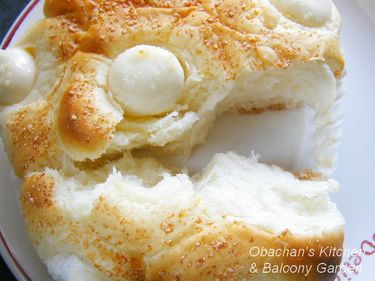
Moko Moko Cheese Bread


Moko Moko Cheese Bread

This bread looked so cute on the shelf at my favorite bakery. This was a sweet bread with condensed milk kneaded into the dough and lumps of sweetened cream cheese on top. Oh, and grated cheese (maybe parmigiana?) was sprinkled on top, too. Really yummy!


-------

I posted a photo of me and my team mates from the dance festival here, if you’re interested. (Scroll down and see the one at the bottom.)
:)

Sunday, August 14, 2005

Drink, Drink, Drink... !!

*******************************
Yes, dear readers, I survived!!
*******************************
(If you’re interested in my experience of the festival this year, click here.)

Unfortunately, there’s not many food-related topics regarding this festival. Our team supplied us with bentos for lunch and supper for 2 days, but they were nothing special, and I couldn’t take pics of them anyway because I didn’t bring my digital camera with me.

What characterizes the festival every year is various kinds of drinks for the dancers!! Oh it was just like pouring liquid into a strainer. Whatever we drank came out instantly as sweat. Of course I couldn’t take pics of the drinks, either, but I can buy the same drinks at any supermarkets real easily, so I can post about them :)

As I wrote in my post about the festival linked above, we danced outdoors in parking lots, shopping streets, shopping arcades and main streets. We “paraded” as we danced, and when we reached the end of each dance venue, we could get drinks at a small booth called “kyusuijo (water booth?).” There local volunteers poured iced tea or water in plastic cups for dancers and collected empty cups. (Only a few booths offered sports drinks perhaps because those are much more expensive than plain water and tea.) Now, each dance team consisted of 30 to 150 dancers, and at one venue, about 70 or 80 dance teams performed a day… I guess. Imagine how much work volunteers had to do to save us from dehydration… I thank them from the bottom of my heart. They are literally our lifesavers!!

Also each dance team had a “drink-supply car” which met the team at the end of the performance at each venue and supplied drinks.

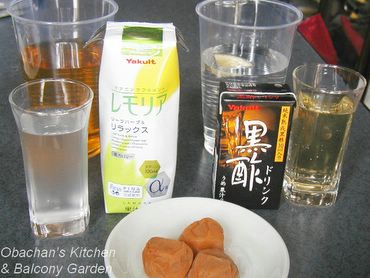
So these are what I remember having at the festival this year.

1) plain cold water --- the most popular drink they gave us at the water booths (Not included in this pic.)
2) Iced Japanese tea or woo long tea (Back left in a big plastic cup) --- the 2nd most popular drink at the booths.
3) Iced water with a bit of lemon slice (Back right in a big plastic cup) --- One booth offered this drink and we liked the refreshing lemon flavor.
4) Lemoria (Paper pack on the left. The drink is in the small glass right next to the pack)--- Lemon-flavored soft drink with herb extract mixed. Supplied at the drink-supply car of our team and probably donated by the former sponsor of our dance team.
5) Kurozu (Dark vinegar) drink (Paper pack on the right. The content is in the small glass.)--- Same as above. Most (esp. middle-aged) dancers incl. myself rushed to the drink-supply car for this drink. The vinegar and ume-plum juice mixed in this drink were a good source of citric acid.
6) Umeboshi (Japanese plum pickles) --- These are not drinks, but supplied at a few booths. Great source of citric acid.

Other than these drinks, some dancers brought a little amount of salt wrapped in plastic wrap and licked it when taking a break. I sneaked out and bought this because I was really running out of energy way before our supper time. This is "a special jelly drink to supply carbohydrates equivalent to a rice ball," according to the text on the package. I like this because it doesn’t cause stomachache even if I dance right after consuming it.

You might think that instead of all those preparations and considerations about dancers’ conditions, we could just have this festival when the weather is cooler, and that would save a lot of money spent on the huge amount of drinks and make things easier and safer for the dancers, staff and audience. Well, tell you the truth; we are stupid and crazy. And being stupid and crazy is exactly the heart of this dance festival.
Honestly ;)

(I'm going to post some more about this festival to my another blog. If you check on them, you may or may not see why being stupid and crazy is so important for this event.)

Monday, August 08, 2005

My First BBQ This Summer

Last night I was invited to a wonderful BBQ party at my friend’s friend’s house. It was my very first BBQ this year and I’m so glad that I did have BBQ at least once this summer.

At my friend’s friend's house, they had a nice small BBQ grill and a few small-size picnic tables in the backyard. Though it took a while to light charcoals, we enjoyed all the food and a nice chat, which was just exactly what I needed. For the record, we barbecued sliced beef, pork, eggplants, asparagus, green peppers and kabocha pumpkins, and we ate them with three kinds of yakiniku dipping sauce. We also had nigirizushi, fresh tomatoes, grapes, iced woo long tea and iced coffee. The dessert was cream puffs filled with ice cream. Very Japanese-style BBQ, isn’t it? (Sorry, no pics. I didn’t bring my digital camera.)

------
Well, dear readers, from today till this coming Saturday, I’ll be busy with the festival and will not have time to post anything. So, please keep your fingers crossed for my survival and come back this weekend to see if I’m still alive or not ;)

Wednesday, August 03, 2005

My Blueberries!


Gelatin Cheesecake with Blueberry Sauce

Guess how many blueberries I was able to pick from my balcony garden this summer? 3.5. No, not thirty-five. Three point five. And the “point five” was the real tiny berry which was about half a size of a regular one.

What can I make out of the 3 and 1/2 blueberries? I couldn’t think of anything but using them for garnishing. So this is what I did. I made a gelatin cheesecake and garnished it with a small slice of lemon, mint leaf and fresh blueberries from my balcony garden!
(Yes, you guessed right --- the blueberry sauce is from the store, not home-made.)

The gelatin cheesecake was just so-so, and the graham-cracker crust at the bottom fell off while transferring the cake to this plate. But, dear readers, to my biggest surprise, the fresh blueberries tasted WONDERFUL, even the half-size one, too!!!

Since the blueberries I bought at the Sunday Market a while back tasted pretty tart, I expected mine to be the same, too. After all, the hot and humid climate here in Kochi cannot be so great for blueberries, and I didn’t do anything special to my blueberry plant… except watering it every day. So, I didn't expect much. My blueberries, however, tasted so sweet and flavorful, not like those I bought at the market at all !! Oh how wonderful it would be if I could pick more of such good tasting blueberries next year?!

You might think I'm overreacting, but for me, fresh blueberries always meant something expensive, being imported from abroad. And probably because they were picked before completely ripe, they were usually a little tart. These days locally grown blueberries are available, but as I wrote above, they are still expensive and not very tasty. Being able to pick such expensive, foreign berries from my own balcony garden, when they are completely ripe and tasty, is almost like a dream come true for me.

Next year, I might be able to make fresh blueberry shake at home!! :D


Oh I can hardly wait.

Tuesday, August 02, 2005

Because It's Terribly Hot...


Shiratama Dumplings in Mint Liqueur Syrup

Don’t you feel like jumping right into this bowl and swim with these shiratama dumplings?

This dessert was an idea I found in a women’s magazine the other day. The pic looked so terribly attractive that I had to give it a try myself.

The syrup was a mixture of mint liqueur, sugar and water. Buying mint liqueur for the syrup was not a problem. I found it at the liquor store where I bought the marsala wine the other day.

The problem was the filling for the dumplings. The original recipe called for candied (or sugared?) lotus seeds, but I had no idea where I could find them. The ones I found on the net were so expensive. So for half of the dumplings, I used shiroan (sweet white bean paste) for substitution. The rest was left with no filling.

What I learned from this experiment:
1) Shiroan filling does not go with mint liqueur syrup. It makes the minty syrup taste like TOOTHPASTE.
2) Plain dumplings taste better in the syrup than shiroan version, but rather tasteless.

What could be a tasty filling for this dessert? What could go well with shiratama AND mint liqueur? Any ideas?

Thursday, July 28, 2005

National "Unagi" Day?!


Obachan's Unagi Donburi (eel on a bowl of rice)

Of course there is no such thing as ”National Unagi (eel) Day” on our calendar here in Japan, but I would think that the day almost deserves such a name. The day is actually called doyo no ushi no hi -– “day of the ox in midsummer” according to an online dictionary -- and said to be the hottest day of the year. It is our custom to eat unagi on that day, and the “day of the ox” fell on July 28th this year.

So what does the hottest day of the year have to do with unagi ? Well, here's a story widely known in Japan about how people started eating eel on that particular day.

More than 200 years ago, owner of a very UNpopular
unagi restaurant asked a guy for an idea for boosting their sales. The guy, Hiraga Gennai was a pharmacist and also a multi-talented genius who later invented something like an electrostatic generator. Gennai put up a poster at the restaurant, which said something like “Eat nutritious eel to beat summer weariness,” and people were convinced that it must be a good thing to eat such a nutritious food on the hottest day of the year.

It worked like a magic. The ad not only saved the slumping restaurant but created a custom that has been passed down for more than 200 years. What a great sales promotion strategy, don't you think? I wonder if anyone today can come up with a promo phrase that has such a long-lasting effect.


Anyway, today, we of course do not believe that eating eel on one particular day only can beat summer weariness. But we just have to try anything if it was said to be “good for health,” and here in Japan everyone does the same thing at the same time. Yes, I’m exaggerating, but maybe it’s not too far from the truth. There was a long line right outside this well-known unagi restaurant in Kochi city. These people were there for unagi bento to go, and only a few bentos were left when I took this photo.

Right outside a big supermarket, two guys were selling broiled eels. It’s not included in this photo, but there was a small BBQ grill next to this table and they were broiling the eels over charcoal. The young guy there was rather unhappy because I took a shot of the products they were selling only, not him. I didn’t have a nerve to just take a photo and say good bye, so I bought one there. The sauce came in a small plastic bag with the eel.

So, everyone, my unagi-donburi was again a ready-made stuff, except the rice I cooked at home :P I did use a little trick when preparing the donburi, though. After cutting the unagi in several pieces, I placed them on aluminum foil, sprinkled sake all over, brought up and pinched the edges of the foil together tightly, then heated the foil-wrapped unagi in a frying pan. This is supposed to make the unagi a little softer and tastier, according to a TV cooking show I saw a long time ago. The trick did not work like a magic, unfortunately, but I do think the photo of unagi-donburi on top looks pretty nice, at least. ;)

* I had been curious about the meaning of doyo so I did a little bit of online research. If you’re interested,
Read More
----------
In an ancient Chinese cosmology, Gogyo Theory (the Five Elements Theory), this world was considered to be made up of the five elements: fire, water, earth, metal and wood. When the theory was applied to the seasons, they associated wood with spring, fire with summer, gold with autumn and water with winter.

They saw the earth (土, pronounced "do")as something to aid the other elements, and placed it between the seasons. The philosophy there is that all seasons and elements return to earth before transforming into the next one. So, the last 18 days of each season is called “Doyo (土用),” i.e., the period of earth.

In ancient Chinese calendar, each day was associated with one of the 12 animals in the Zodiac. The "day of the ox” in the Doyo period between summer and autumn is supposed to be the hottest day of the year, perhaps because the sun comes to a certain point on the ecliptic on that day ….


That’s what I think I understood from several websites I went through regarding the "day of the ox.” Corrections by experts would be appreciated. PLEASE!

Monday, July 25, 2005

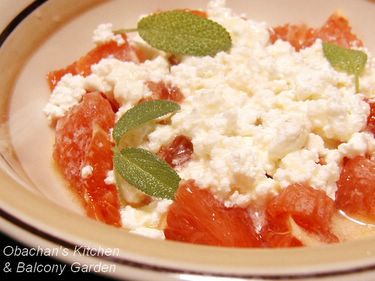
Ruby Red Grapefruit & Cottage Cheese Salad


Ruby Red Grapefruit and Cottage Cheese Salad

Boy, it’s hot…..!!
I hate coming back to my room which I won’t hesitate to call “the most unpleasant sauna on the face of the earth.” The stress I feel the moment I open the door must be affecting my mental health in a very negative way. To cope with it, I guess I need to feed myself with something refreshing and nutritious.

So here it is. Ruby Red Grapefruit and Cottage Cheese Salad. For the dressing, I mixed juice of the ruby red grapefruit, olive oil and yogurt, then seasoned with a little sugar and herb salt. This idea was, again, from a Japanese website, but I didn’t follow the recipe, as usual. (I almost doubled the amount of the grapefruit juice.)

Yes, the salad was very light-tasting and refreshing. I liked the way the dressing complemented the taste of cottage cheese. I finished one bowl real quick and wanted more.

Oh well, why not? This is one of those GUILT-FREE dishes, isn't it?
: )

Saturday, July 23, 2005

Rhubarb Cupcakes


Rhubarb Cupcakes

So this is what rhubarb tastes like!! :D

Today I finally used my rhubarb for baking. A couple of days ago, its leaves started turning yellowish, showing a sign of some kind of disease, so I decided to use it before it died. Now, everyone, this was my very first time using rhubarb in any kind of baking/cooking… I have tasted only a little bit of rhubarb jam before and that was it. I was so excited to find out how rhubarb chunks would taste when baked in a cake.

These rhubarb stalks were very thin and short, but I guess that was the best I could expect from growing rhubarb in a small pot on a balcony. I didn’t think they were enough for making any decent-sized cake, so after considering a few alternatives, I finally decided to downsize this recipe and make small cupcakes.

The result:
I just don’t understand why, but the top of the cupcakes cracked in a strange way… Underneath the thin layer of granulated sugar and chopped cashew nuts, there are big cavities… But the taste is GOOOOOOOOD!!
The sourness of the rhubarb chunks is just so refreshing in the sweet cupcake.
Hmmmm.... I love it !!

Wednesday, July 20, 2005

A La Provancale??


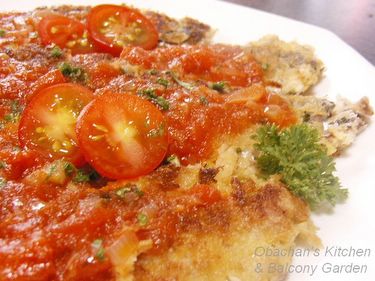
Horse Mackerel A La Provancale???


Honestly speaking, I don’t know exactly what the word “a la Provancale” means. Now I often see, in Japanese cookbooks/websites, dishes named with Japanese translation of “a la Provancale” at the end. From their recipes, I assumed that "a la Provancale" meant a dish with garlic, olive oil and tomatoes. Is this wrong?

Anyway, what I tried out this time was named “horse mackerel a la Provancale” in Japanese. The horse mackerel fillets were salt-and-peppered and breaded (I mixed in chopped basil leaves in the bread crumbs), then fried in a frying pan. I made the tomato sauce with canned tomatoes.

What I really wanted to do was baking the breaded mackerel fillets in the oven with the tomato sauce and grated cheese on top, but unfortunately I had no cheese left.
Maybe next time ;P

I don't know if this is an appropriate combination, but I thought that it would have been really nice with garlic bread and vichyssoise.

Thursday, July 14, 2005

Kawa-Udon


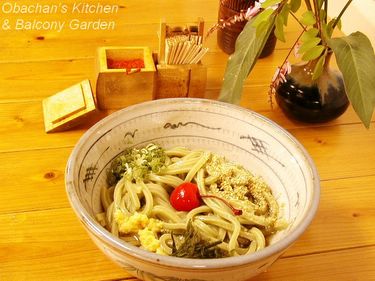
Kawa Udon ("River" Udon")

This is the cold udon I had at the Washi Paper Craft Village.
Green laver was kneaded in the dough, which gave the noodles refreshing green color. I guess they named it Kawa (river) udon because the laver came from the river.

Very tasty with the toppings: grated ginger, minced scallion, sesame seeds and green laver. Oh, and a cherry, too. (I'm not too crazy about a cherry on top of Japanese traditional noodles... It looks pretty, but taste-wise, I don't think it's such a great match.)

This udon was available at a small eatery in the building on the right, where they sold local vegetables and souvenirs.

Nice tea time I had today


"Cake set"

I dropped by a coffee shop after visiting the Paper Museum in a town called Ino-cho. What's on top of the cake was not a chestnut but pear compote. The brown-colored gelatin layer was caramel-flavored.

The people there were super-nice. The lady who works there drew me a nice map when I asked the way to the closest tram stop. I was too tired and forgot about time, so it was already 20 minutes past their closing time when I checked out, but they never said anything about that... They just nicely gave me a coupon book, and kept regretting not having enough time to give me a lot more information about sightseeing in Kochi.

P.S. Click here to share the good time I had today ;)

Wednesday, July 13, 2005

Reimen, Not Ramen


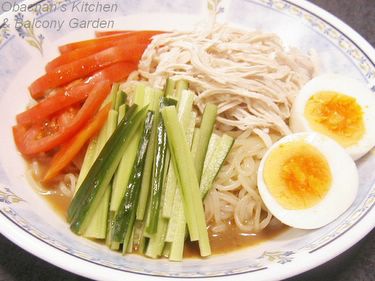
Reimen or Hiyashi Chuka

When it’s so hot and humid, I love to have this for lunch. We call it 冷やし中華Hiyashi Chuka (Cold Chinese noodles) or 冷麺Reimen (Cold noodles). I’m not sure if this is a Japanese invention or something that came from China. Anyone?

Unlike regular hot noodles, reimen is usually served in a very flat bowl or on a plate, and the soup is poured over the noodles just like dressing. Or you dip the noodles into the soup served in a separate small bowl and slurp.

This was another ready-made stuff again. All I did was boiling/cooling the noodles and preparing the toppings. The sesame sauce came in a plastic bag and was pretty tasty.

Yummy! :D

Food at Hirome 1 -- Shio-Tataki Donburi --


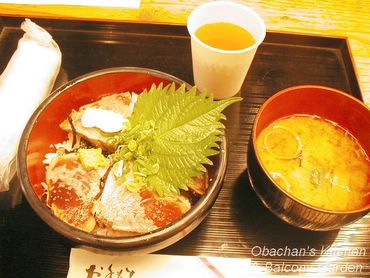
Shio-tataki (Seared Bonito Seasoned with Salt Only) Donburi

This is what I had today at Hirome: shio-tataki donburi (seared bonito seasoned with salt only and served on a bowl of rice). It was 600 yen with the small tea and miso soup.

To be honest, I have heard that in some fishing towns in Kochi, people eat seared bonito with salt only without any soy sauce or ponzu, but never tried it myself. It is supposed to be the oldest preparation method of seared bonito dish and not very popular even in this prefecture. I’m originally from a small fishing town in the eastern Kochi, but I have never seen anyone eating seared bonito that way in my hometown.

Usually, when making seared bonito, you sprinkle only a little salt (or no salt at all) over bonito fillet beforehand, and after searing it, you may or may not cool it in ice water. After slicing the seared fillet, you put bunch of minced scallions and sliced garlic all over the bonito slices and eat with ponzu or soy-based sauce. But for the shio-tataki, you use no ponzu, no soy sauce. You sear and slice a bonito fillet (never cool it in ice water), sprinkle good amount of salt all over and pat with hands. That's what I read about the traditional preparation method of shio-tataki.


Maybe they used rock salt for seasoning?

The shio-tataki was a totally new taste to me. Yes, as I had read in a book, it certainly brought out the taste of seared bonito better than eating it with ponzu or soy sauce, because tangy sauce and lots of garlic slices can cancel out the taste of bonito itself to some extent. If you want to fully appreciate the freshness of good bonito and the art of skilled searing, maybe shio-tataki is the best way. In other words, it’s no good unless the quality of bonito itself is very good. The shio-tataki I had today was not bad for the price, I thought, but for me, about three slices were enough. I grew up eating tataki with very tangy, yuzu-flavored ponzu-like sauce, so for me to really love shio-tataki over the ones I’m used to, it has to be the top-class one.

My Favorite Place - Hirome Ichiba -


View from the South Entrance of Hirome Ichiba

Hirome ichiba (market) is one of my most favorite places in Kochi. This spot is often introduced as a “food court” on the net, but in my opinion, it is much more than that. It is where you can encounter things new to you, and people new to you, and at the same time feel somewhat at home.


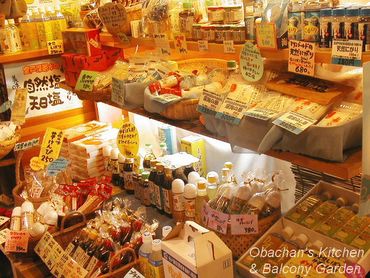
Local goods (salad dressings, soy sauce, salt, etc.) on the shelf at a souvenir shop

I stumbled into this place for the first time when I returned to Kochi in 2000 after living in Kansai for about 20 years. According to its official website, Hirome ichiba was founded in 1998 as a new sightseeing spot. In addition to making it a place to introduce local cultures to both visitors and local people, they wanted it to be a place for people to socialize in a friendly, down-to-earth kind of atmosphere. So among the more than 60 shops in this market, you see shops like a greengrocer, fish shop, meat shop, souvenir shop, craft shop and even a small computer school as well as izakayas and various eateries.

Read More


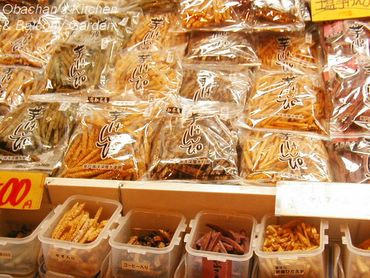
One of our local traditional sweets: Imo Kenpi (Deep-fried potato strips) with various flavors incl. yuzu, sesame, coffee, garlic, green laver flakes, etc… and they say deep-sea water was used somewhere in the cooking process.)


Deep-fried fish cakes in different shapes and colors


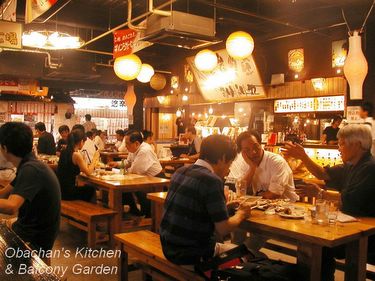
In the food court section, there are big wooden tables and benches surrounded by eating/drinking establishments offering variety of foods ranging from typical Kochi cuisine to spicy Southeast Asian dishes. It is a convenient place for locals to drop in alone and have lunch or supper (with some drinks if it's after work) for a reasonable price. For tourists, it is also a convenient place that is close to the 2 popular sightseeing spots, Kochi castle and the Sunday Market, and offers most of the local specialty dishes for a reasonable price.


You can taste typical local dishes at Hirome, including 鰹のタタキ(Katsuo no tataki or seared bonito, the ultimate local food that Kochi is famous for). One shop that recently opened in the market even shows the searing process to the customers. It is said that burning rice straw produces the best temperature for searing bonito, and at this place you can see the cook throwing some straw into fire to make a big flame to sear your bonito. For more adventurous tourists, they have delicacies like ウツボの唐揚げ(Utsubo-no Karaage: deep-fried moray eel), どろめ (Dorome: raw baby sardines, usually served with dressing made from miso and garlic-leaf paste) and 酒盗(Shuto: salted bonito guts). I have never tried any of those.

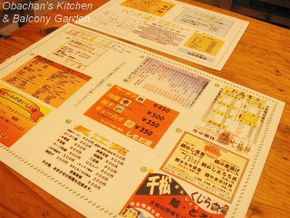
A menu and the map of the market are placed on each of the big wooden tables there. You can choose from the menu and go to any of the eateries (they have menu and often food photos/ samples there) and order what you want, then if they're not too busy, they may ask you where your table is and “deliver” the food to you when it’s ready. One shop even lists their phone number on the menu so that you can call them with a cell phone from your table and order food. Unfortunately they don’t have any English menu in Hirome yet. When you finished eating/drinking, you can just leave empty dishes and glasses on the table. Those on dish crew would come around with a cart and pick them up.


The place turns into a more friendly place with somewhat "borderless(?)" atmosphere at night as many drinking places in the market open. People drink and chat cheerfully with their friends, and sometimes even with those who they met for the first time there. That’s the magic of the place, I think… I don’t know if it’s the size and alignment of those wooden tables and benches that make people feel easier to mingle?? Anyway, except for the very crowded times, I feel comfortable just dropping by and taking a seat there all by myself to have a drink. A couple of times, a cheerfully intoxicated person came to talk to me, and I didn't feel disgusted or scared… I just enjoyed chatting. There’s something in the atmosphere there that makes me feel it’s OK for such things to happen.

Or maybe I feel so attached to Hirome ichiba because I’ve been to the big dance parties held there several times a year. Every year they have events like Halloween party, St. Valentine’s Day party, etc. starting at around 11:30pm after closing the shops in the market, and all the partygoers, both non-Japanese and Japanese, get together to drink, dance and have a ball.

Hirome Ichiba Market
2-3-1 Obiya-machi, Kochi
Kochi 780-0841
Official website --- http://www.hirome.co.jp (Japanese only)

Sunday, July 10, 2005

Ooops! -- Matcha Custard Pudding --


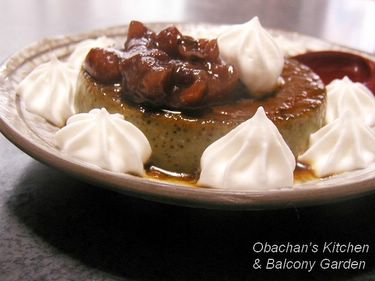
Matcha Custard Pudding

OK, I wouldn’t call this a total mess, but I couldn't help saying “OMG!” when this came out from the custard cup and landed on the plate. I didn’t expect it to turn out this flat.

Wondering what this is? It is, actually, matcha custard pudding made from soy milk, egg, sugar and matcha (ground green tea). Would have tasted much better if it wasn’t overdone and laughably short like this.

Well, I’ll do better next time ;P